Welding Machines for Professionals and Hobbyists in 2026: A Practical Buying Guide
In 2026, buying a welding machine is less about grabbing the highest amperage box on the shelf and more about matching process, power, duty cycle, and digital controls to the work you actually do. The market now spans featherweight inverter units for garage projects, rugged multiprocess systems for fabricators, and smart models that make setup easier without replacing skill. Whether you repair trailers on weekends or weld for a living, the right machine can save time, cut waste, and improve results. This guide breaks down the options in plain English so you can choose with confidence instead of guessing from spec sheets.
Outline and Market Overview: Why Welding Machine Choice Matters in 2026
Before comparing specific machine types, it helps to map the road ahead. This article follows a simple outline designed for both professionals and hobbyists who want practical answers rather than marketing slogans. It covers the major welding processes, the power and performance specifications that actually affect results, the newer features worth understanding in 2026, and the buying paths that make sense for different users. In short, the guide asks one essential question: what machine fits your work, your budget, and your workspace?
Here is the path we will follow:
• welding processes and their best uses
• real-world performance factors such as amperage, input power, and duty cycle
• modern features including inverter design, pulse functions, and synergic controls
• buying advice for garage users, mobile welders, repair technicians, and small fabrication shops
The timing matters because the 2026 market is notably mature. Inverter technology, once treated as a premium feature, is now standard across much of the midrange. Many machines are lighter than older transformer units, draw power more efficiently, and offer smoother arc behavior at lower settings. Dual-voltage models have also become common, giving users the flexibility to run on 120V in a home garage and 240V when higher output is needed. That flexibility is especially useful for people who started as hobbyists but now take on side work, farm repairs, or small production tasks.
Pricing has widened as well. Entry-level hobby welders can still be found at approachable price points, but professional-grade multiprocess systems often cost several times more once torches, regulators, carts, and consumables are included. This is why a good buying decision starts with honest job analysis. Someone welding thin mild steel brackets once a month does not need the same machine as a fabricator running beads on thicker structural material every day. A welder is not just a tool; it is the center of a workflow that includes preparation, fit-up, shielding gas, electrical supply, cleanup, and maintenance.
There is also a quiet shift in buyer expectations. Many users now want a machine that is easier to learn, faster to adjust, and more forgiving when conditions are less than perfect. That does not mean skill has become optional. It means modern machines can reduce setup friction and help a capable operator spend more time welding and less time second-guessing. If 2026 has a theme, it is not flashy technology for its own sake. It is practical capability packed into smaller, smarter, and more adaptable equipment.
MIG, TIG, Stick, Flux-Core, and Multiprocess: Choosing the Right Welding Process
If welding machines are the vehicles, the welding process is the road you choose. That choice affects learning curve, weld appearance, speed, cleanup, material range, and total operating cost. For most buyers in 2026, the first decision is not brand; it is process. The four most common paths are MIG, TIG, stick, and flux-core, with multiprocess machines combining several of them into one platform.
MIG welding remains the most popular entry point because it is relatively easy to learn and productive on common steel projects. A good MIG machine can be ideal for automotive brackets, gates, shop tables, trailer repairs, and general fabrication. With shielding gas, MIG typically produces cleaner welds and less slag than stick. Flux-core, which is often run on MIG-style machines, is useful outdoors because it tolerates wind better than gas-shielded MIG. That makes it practical for farm work, jobsite repairs, and field conditions where shielding gas can be disrupted. The tradeoff is more spatter and cleanup.
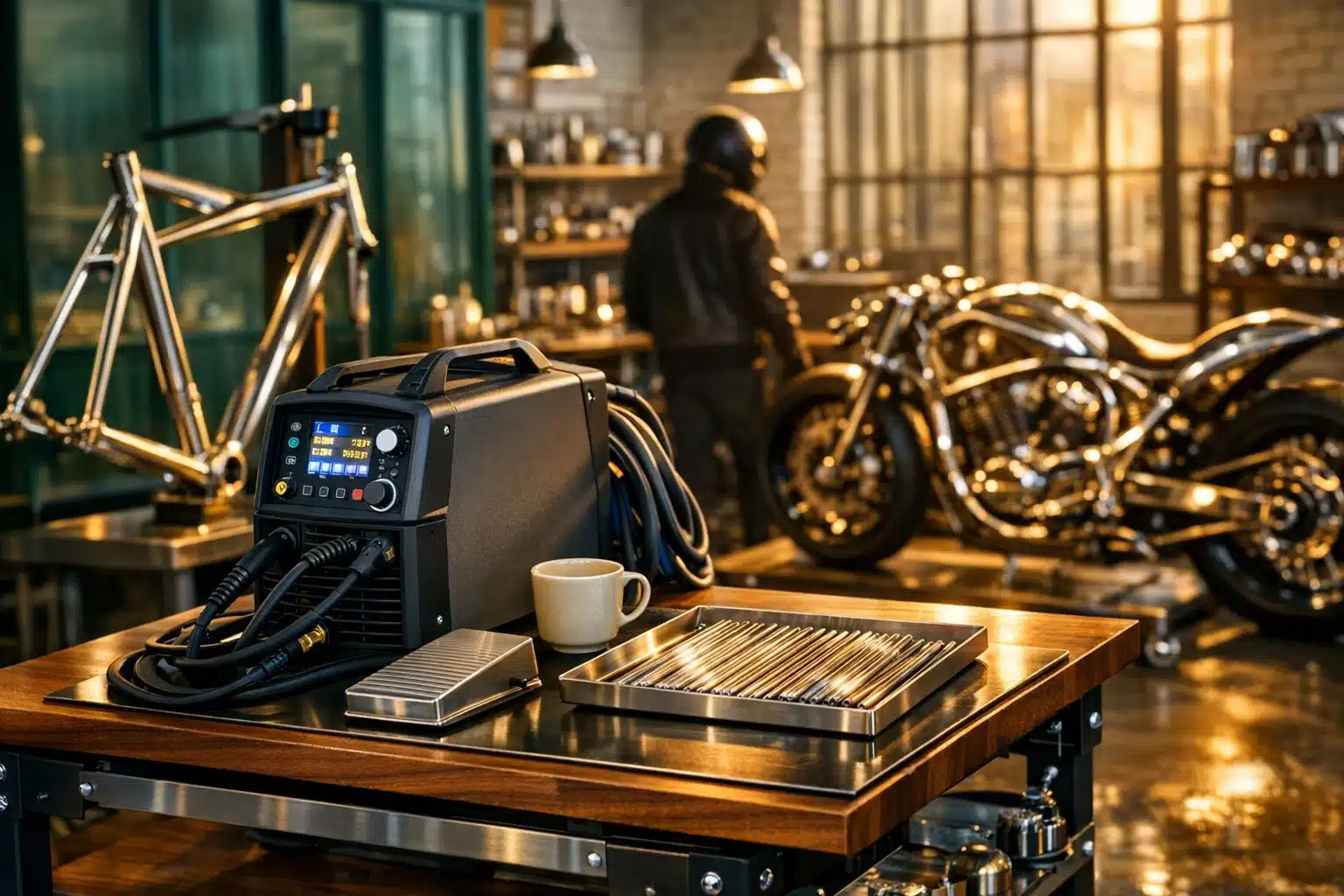
TIG welding sits at the more refined end of the spectrum. It is slower, more technique-sensitive, and usually more expensive to set up properly, yet it offers excellent control on thin material and a polished final appearance. Hobbyists drawn to motorcycles, stainless projects, bicycles, or artistic metalwork often admire TIG because it feels like welding with a pen instead of a broom. Professionals in fabrication, motorsport, food-grade stainless, and precision work often rely on it for exactly the same reason. Aluminum work, especially when AC TIG is required, can push buyers into a different machine class, so it is wise to confirm that capability before assuming a TIG welder does it all.
Stick welding still earns respect because it is rugged, simple, and dependable in outdoor or dirty conditions. Rusty steel, painted surfaces, thicker sections, and remote repair work often suit stick better than delicate indoor processes. It is common in construction, maintenance, agricultural repair, and structural tasks. The machine itself can be straightforward, but technique and rod selection still matter. Beginners sometimes overlook stick because it looks old-school, yet it remains one of the most useful processes where versatility and toughness count more than cosmetic perfection.
Multiprocess machines have become especially attractive in 2026 because they let one power source handle several jobs. A user might run MIG for fast shop work, switch to stick for outdoor repairs, and keep TIG available for detailed work. That convenience is valuable, but not every multiprocess unit is equally strong in every mode. Some are excellent MIG machines with secondary TIG or stick capability, while higher-end units offer deeper control across all supported processes. The smartest choice depends on your real mix of projects:
• choose MIG or flux-core for speed and accessibility
• choose TIG for precision, thin stock, and cleaner presentation
• choose stick for durability, outdoor work, and rough material
• choose multiprocess when your workload genuinely crosses boundaries
Power, Amperage, Duty Cycle, and Welding Capacity: The Specs That Really Matter
Once the process is clear, the next step is learning which specifications affect real performance and which ones mainly decorate product pages. For most buyers, the critical items are input power, amperage range, duty cycle, material thickness capability, and arc stability at the settings they will actually use. These numbers shape daily usability far more than a dramatic label on the front panel.
Input power is the first checkpoint. Many hobby-oriented machines run on 120V, which is convenient for home garages and light repair work. Typical 120V welders often handle thinner steel comfortably, but they can reach their limits when thicker material or long welds enter the picture. Dual-voltage machines are increasingly popular because they can operate on 120V for portability and 240V for stronger output. A 240V-only machine still makes sense in a dedicated shop where higher demand is normal. For professionals, that extra headroom often means faster travel speed, deeper penetration where appropriate, and less waiting for the machine to cool.
Amperage range tells you how broadly a machine can operate. A welder that starts low with good control is useful for thin sheet and delicate settings. A machine that reaches higher current with stability is better suited for heavier material. In practical terms, many small hobby MIG units live in the roughly 90 to 140 amp class, while midrange and professional machines commonly stretch into 180 to 280 amps or more. The point is not to chase the biggest number available. It is to buy enough capacity for your thickest common job while keeping good control on your thinnest one.
Duty cycle deserves special attention because it separates a machine that looks capable from one that stays productive. A duty cycle rating tells you how long a welder can operate within a fixed ten-minute period before overheating. For example, a 20 percent duty cycle at a given amperage means about two minutes of welding and eight minutes of cooling at that setting. A 60 percent rating allows much longer continuous work. Hobbyists often underestimate how important this becomes once projects get larger. Professionals already know that downtime can feel longer than the clock suggests, especially when a job is flowing well and the machine taps the brakes.
Other useful checks include generator compatibility, spool gun support for MIG aluminum work, and stable low-end performance. A feature list should always connect back to tasks:
• light bodywork and sheet metal need controlled low amperage
• fabrication and repair work benefit from stronger midrange output
• long welds demand better duty cycle
• mobile jobs may require generator-friendly electronics
• aluminum work may call for spool gun support or AC TIG, depending on process
The best specification sheet is the one you can translate into time saved, cleaner results, and fewer workarounds. That is where smart buying begins.
What Modern Welding Machines Offer in 2026: Inverter Design, Controls, and Useful Features
One reason the 2026 market feels so different from older generations is that welding machines now pack more intelligence into smaller boxes. Inverter-based designs dominate much of the field because they improve efficiency, reduce weight, and allow more precise control of the arc. The practical result is not just easier transport. It is a machine that can feel smoother, more responsive, and more adjustable from one task to the next.
Digital interfaces have improved too. Entry-level units often provide clearer displays than older professional machines ever did, while upper-tier systems may include memory presets, process-specific programs, and synergic controls. Synergic settings adjust wire feed speed and voltage together based on selected material and wire diameter. For a beginner, that can shorten the distance between unpacking a machine and laying down a usable bead. For an experienced welder, it can speed up repetitive setup without locking out manual tuning. Think of it as a helpful copilot, not an autopilot.
Pulse capabilities are another area worth understanding. Pulse MIG and pulse TIG can improve control, reduce heat input in certain applications, and help with out-of-position work or thinner materials. These functions are most meaningful for users who will actually exploit them, such as fabricators working with stainless or aluminum, or professionals who care about heat management and consistent appearance across repeated welds. A casual garage user may appreciate them, but does not always need to pay extra for them. The key is to separate “nice to have” from “money well spent.”
Portability remains a major selling point. Many inverter machines are compact enough to carry with one hand, which matters for mobile technicians, contractors, and anyone working in a crowded shop. Light weight, however, should not distract from durability. Cable quality, torch ergonomics, fan behavior, cooling design, and the sturdiness of connectors all influence how a machine feels after six months of real use. A welder that travels easily but arrives with flimsy leads is only halfway portable.
Features worth evaluating in 2026 include:
• clear digital displays that are readable in bright shops
• preset memory channels for recurring jobs
• dual-voltage operation for flexible use
• spool gun compatibility for aluminum on MIG platforms
• lift TIG or high-frequency start, depending on TIG needs
• burnback, inductance, and arc force adjustments where relevant
• strong service support and easy access to consumables
There is a certain charm in a machine that starts cleanly, holds a steady arc, and lets you focus on hand control instead of machine drama. That charm is not mystical. It comes from thoughtful engineering. Modern features are valuable when they reduce friction, improve consistency, and make the machine adapt to the job instead of forcing the job to adapt to the machine.
Conclusion for Professionals and Hobbyists: How to Buy the Right Welder and Live With It Well
The best welding machine in 2026 is not the most expensive one, the most advanced one, or the one with the loudest online fan club. It is the one that fits your material range, available power, work environment, skill level, and growth plans without creating unnecessary expense. That conclusion sounds simple, yet it is the difference between a tool that earns its keep and a tool that spends most of its life being admired from the corner of the shop.
For hobbyists, a compact inverter MIG or a solid dual-voltage multiprocess machine often makes the most sense. It leaves room to learn, covers a broad range of small to medium projects, and keeps setup manageable in a garage or home workshop. Buyers focused on decorative metalwork, stainless pieces, or precision repairs may lean toward TIG, but they should budget for the slower pace and the extra accessories that make TIG pleasant rather than frustrating. A weekend builder usually benefits more from ease of use, stable arc behavior, and affordable consumables than from exotic features that rarely leave the menu screen.
Professionals should approach the purchase from the opposite end: productivity first. That means examining duty cycle, serviceability, torch quality, cable length, machine cooling, and how well a welder performs over long shifts or varied job conditions. Mobile repair technicians often value durability, generator compatibility, and fast deployment. Small fabrication shops may favor a strong 240V multiprocess unit that can handle MIG as the daily bread-and-butter process while keeping TIG or stick ready for specialized tasks. In a business setting, the machine cost is only part of the equation. Downtime, rework, inconsistent results, and operator frustration carry real financial weight.
Whichever side of the fence you are on, ownership habits matter. Plan for the full system, not just the power source:
• proper helmet, gloves, jacket, and ventilation
• correct wire, rods, filler metal, and shielding gas
• electrical capacity that matches the machine
• routine cleaning of dust, liners, tips, and connections
• dry storage for consumables and regular inspection of leads
A good welder rewards patience. The first clean bead on a new machine has a satisfying spark to it, but the deeper reward comes later, when settings feel familiar, movements become efficient, and the machine stops being a mystery and starts being a dependable partner. If you buy with your real work in mind and maintain the equipment properly, a smart 2026 welding machine can serve both craft and commerce with equal honesty.