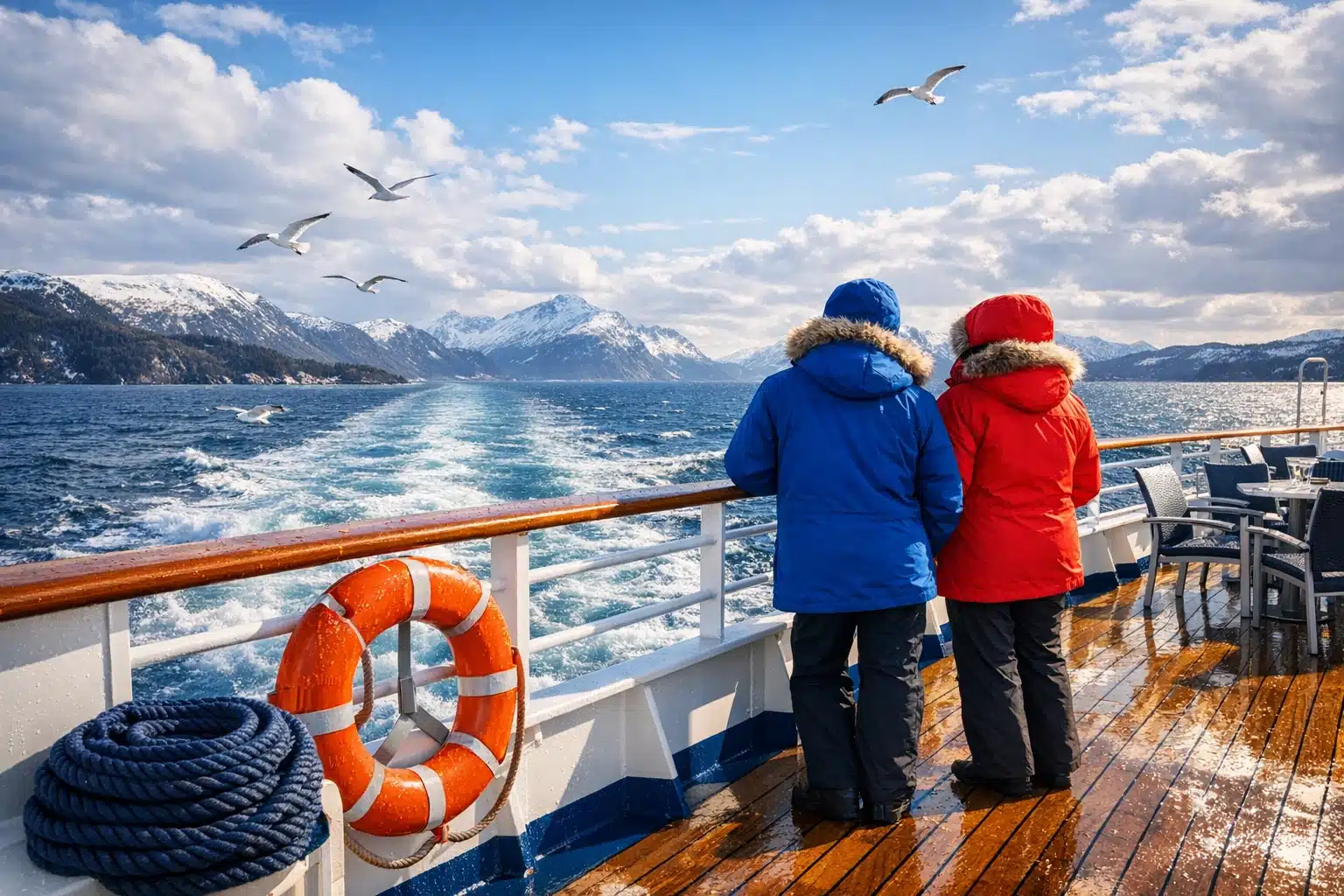
2-Night Northern Lights Cruise from Hull to Norway
Outline and Introduction: Why This Short Cruise Draws So Much Interest
Few short breaks manage to feel both cinematic and convenient, yet a 2-night Northern Lights cruise from Hull to Norway comes surprisingly close. It blends winter sea views, hotel-style comfort, and the real chance—never a guarantee—of spotting the aurora without committing to a long Arctic expedition. For travelers in northern England, skipping the airport also changes the mood entirely, because the holiday begins at the terminal rather than at the boarding gate.
The idea is easy to understand. Northern lights travel is often associated with long flights, remote hotels, specialist photography tours, and a fair amount of planning. A sailing from Hull offers a different kind of entry point. Instead of treating transport as a hurdle, it makes transport the main stage. You unpack once, settle into your cabin, step onto the deck, and let the North Sea carry the story forward. That alone gives this type of trip a very different rhythm from a standard city break.
This article follows a clear structure so readers can judge whether the cruise suits their budget, expectations, and travel style. The main points are:
- what a 2-night Northern Lights cruise from Hull usually involves
- how route, season, latitude, and weather affect the likelihood of seeing the aurora
- what life onboard is really like during a short winter voyage
- how the price and value compare with flying to Norway or booking a longer northern itinerary
- which travelers are likely to enjoy it most, and who may prefer another format
Its relevance is practical as well as emotional. Short cruises appeal to people with limited holiday time, those who prefer regional departure ports, and travelers who want something more atmospheric than a typical weekend away. At the same time, the words “Northern Lights” can create expectations that need grounding in reality. The aurora is a natural phenomenon influenced by solar activity, latitude, darkness, and cloud cover. No cruise can promise it on demand, especially on a two-night schedule. That does not weaken the appeal; it simply changes the way the trip should be understood.
Seen in the right light, this is not only an aurora hunt. It is a winter mini-adventure, a sea crossing with a Norwegian backdrop, and a travel style that suits people who enjoy mood as much as checklists. If the sky performs, it becomes unforgettable. If it does not, the journey can still deliver a satisfying escape with scenery, fresh air, and the quiet thrill of heading north into darkness.
Route, Season, and Realistic Chances of Seeing the Northern Lights
The most important thing to understand about a 2-night Northern Lights cruise from Hull to Norway is that the route shapes the experience more than the marketing label does. Norway is a long country, and there is a major difference between reaching its southern or western coast and traveling deep into the Arctic. Hull sits at roughly 53.7 degrees north, while Bergen is around 60.4 degrees north and Tromsø is close to 69.6 degrees north. That difference matters because auroral visibility generally improves at higher latitudes, especially within or near the auroral oval.
In practical terms, a short sailing from Hull is more likely to operate as a special winter cruise or event voyage than as a substitute for a longer Arctic expedition. Depending on the operator and itinerary design, the ship may spend most of the trip at sea, head toward darker waters, or approach parts of the Norwegian coast where conditions are better than in eastern England but still far from the strongest aurora zones in the far north. This makes honest expectation-setting essential. A compact cruise can provide a genuine chance, yet it usually cannot compete with a week in northern Norway for sheer aurora probability.
Season matters as much as geography. Northern lights are normally sought between late September and March, when nights are long enough to create the darkness required for viewing. December through February offers the longest dark windows, but darkness alone is not enough. Cloud cover can block the display completely, and Norway’s coastal weather is famously changeable. A clear sky over the sea may matter more than a strong forecast hidden behind heavy cloud over land.
Travelers often focus on aurora apps, the KP index, and space weather alerts, but these tools have limits. They can suggest elevated activity, yet they cannot remove the basic uncertainties of cloud, route, or timing. On a short cruise, there is less room for second chances. A longer itinerary gives travelers more nights, more latitude, and more flexibility. A two-night trip instead offers intensity and convenience.
That comparison is useful:
- a short Hull departure is easier and often more accessible for travelers in northern England
- a fly-and-stay trip to Tromsø or Alta usually offers stronger aurora odds
- a longer Norwegian coastal cruise provides more viewing windows but requires more time and money
So what is the realistic position? Think of this cruise as a winter sea break with aurora potential, not as a guaranteed sky show. That framing protects against disappointment and makes any sighting feel earned. When the clouds part, the deck falls quiet, and a pale green ribbon begins to move above the mast, the brevity of the voyage suddenly becomes part of its magic. It feels improbable, fleeting, and all the more memorable because it was never certain.
Life Onboard: Cabins, Deck Time, Comfort, and What to Pack
Because the trip is short, the onboard experience carries unusual weight. On a seven-night cruise, a mediocre cabin or a missed activity may fade into the background. On a two-night voyage, however, comfort, layout, and atmosphere have a much larger effect on the overall impression. Most travelers will spend a high proportion of the break on the ship itself, so it helps to think about the vessel not simply as transport, but as the destination for much of the journey.
Cabin choice matters more than some first-time passengers expect. An inside cabin can be the most budget-friendly option and may suit travelers who only want a base to sleep and shower. An outside cabin, though, adds natural light during daytime hours and can make the room feel much less enclosed. On a winter route, when wind and darkness dominate the deck after sunset, having a pleasant private space becomes especially valuable. If seas are lively, being able to retreat comfortably is not a small luxury; it is part of the trip’s resilience.
Public spaces also deserve attention. Ferry-style or mini-cruise ships often feature lounges, bars, buffet areas, restaurants, and observation points, but the tone can vary widely. Some sailings lean social and festive, while others feel calmer and more scenic. That difference affects who will enjoy the voyage most. Couples may seek a quiet corner with panoramic windows, solo travelers may appreciate informal social spaces, and families may prioritize easy dining and straightforward cabin access. Even on a short route, atmosphere matters.
The weather is another major consideration. The North Sea in winter can be dramatic, and motion-sensitive travelers should prepare rather than improvise. Packing well helps:
- layered clothing for standing outside after dark
- a waterproof outer layer in case of spray or rain
- gloves and a hat, because deck temperatures can feel sharper than expected
- comfortable shoes with good grip
- sea sickness medication or bands if you know you are sensitive
- a phone or camera with night mode, plus patience rather than unrealistic expectations
There is also a small art to aurora watching at sea. Bright indoor lighting reduces night vision, so stepping outside for a while and allowing your eyes to adjust can help. The best display may not look like a bright green movie poster at first glance. Sometimes it begins as a pale veil, a soft arc, or a shifting silver-green smear that grows more obvious as your eyes adapt. That subtle beginning is part of the fascination. One moment the sky looks merely cold, and the next it seems to wake up.
If you travel with the right mindset, the onboard hours become an asset rather than dead time. Meals break up the evening, lounges offer warmth between deck visits, and the hum of the ship creates a steady backdrop to the uncertainty outside. This blend of comfort and exposure is exactly why many people find the cruise format so appealing.
Cost, Value, and How It Compares with Flying or Booking a Longer Trip
Price is one of the strongest reasons travelers look at a 2-night Northern Lights cruise from Hull, but value depends on understanding what you are really paying for. A short cruise can look attractive because it bundles transport, accommodation, and onboard facilities into one booking. That simplicity is useful. You are not separately pricing airport parking, flights, baggage, hotel nights, and local transfers unless you need extra travel to reach Hull itself. For many travelers in Yorkshire, the North East, the Midlands, and parts of the North West, that can make the logistics feel refreshingly manageable.
That said, the headline fare is rarely the full figure. The final cost may also include cabin upgrades, meals beyond the basic package, drinks, travel insurance, parking, onboard extras, and seasonal demand pricing. A promotional inside cabin can look economical, while an outside cabin, better dining options, and a few add-ons can change the budget quickly. None of that is unusual in cruise travel, but it matters on a short itinerary because small extras represent a larger percentage of the total.
Compared with flying to northern Norway, the cruise often wins on convenience and sometimes on total planning stress. You avoid airport queues, baggage restrictions, and connecting transfers in winter weather. You also avoid the uncertainty of assembling a complex trip around a two-day window. On the other hand, a flight to Tromsø, Alta, or even Kirkenes positions you in much stronger aurora territory. That usually means higher odds, more excursions, and greater destination depth. The trade-off is clear: better sky-hunting conditions versus easier departure and a more relaxed travel format.
A longer cruise offers yet another comparison point. More nights mean:
- more opportunities for clear weather
- more time spent at higher latitudes
- more variety in ports, scenery, and onboard pacing
- a better chance to recover from one cloudy evening
But longer trips ask for more annual leave and a larger budget. Not everyone wants a full expedition-style commitment. Some travelers simply want a taste of winter cruising and the possibility of an aurora sighting attached to it.
In value terms, the Hull option works best when judged as a short break with a strong atmosphere-to-effort ratio. It is not the cheapest possible weekend, and it is not the most efficient aurora strategy. What it does offer is a memorable middle ground: easier than building an Arctic itinerary from scratch, more distinctive than a standard city escape, and often emotionally richer than the modest duration suggests. If your goal is pure probability, go farther north for longer. If your goal is a compact, scenic, low-fuss adventure with upside, this cruise can make excellent sense.
Who This Cruise Suits Best and Final Conclusion for Prospective Travelers
The ideal traveler for a 2-night Northern Lights cruise from Hull is not necessarily the person chasing the highest possible aurora success rate. It is more often someone who values ease, atmosphere, and novelty in equal measure. This could be a couple looking for a winter break that feels more unusual than a hotel weekend, a first-time cruiser who wants a short introduction to life at sea, or a time-limited traveler who cannot spare a full week for northern Norway. It can also suit people who dislike airports, prefer regional departures, or enjoy the romance of ships, dark horizons, and cold-weather scenery.
It may be less suitable for travelers with very fixed expectations. If seeing a vivid aurora is the only outcome that would make the trip feel worthwhile, a short cruise is a risky bet. Nature does not work to a two-night timetable, and the combination of cloud, route, and solar activity can frustrate even the best-planned journey. In that case, a longer stay in Tromsø or another high-latitude destination would be the stronger choice. Similarly, travelers who are highly prone to sea sickness should think carefully about winter conditions in the North Sea before booking.
For those who do fit the profile, a few booking principles help. Read the itinerary closely, check what is actually included, look at cabin categories early, and avoid assuming that “Northern Lights” means consistent Arctic positioning. If the operator provides route notes, deck-viewing guidance, or seasonal travel advice, treat that information as more important than polished advertising language. Sensible preparation increases satisfaction far more than romantic optimism alone.
A quick checklist can help clarify whether this is your kind of trip:
- you want a short break rather than a long expedition
- you enjoy ships, sea views, and time onboard
- you can accept the aurora as a possibility, not a promise
- you prefer a simpler departure from Hull over a multi-stage flight plan
- you value mood, scenery, and experience as much as ticking off a sighting
In summary, this cruise is best understood as a compact northern escape with an aurora-shaped bonus. Its strength lies in blending accessibility with adventure. You leave from an English port, cross into darker waters, brush against Norway’s winter atmosphere, and spend two nights in a setting that already feels unlike everyday life. For the right traveler, that is enough to justify the fare even before the sky does anything extraordinary. And if the clouds open and the aurora arrives in a wavering line above the ship, the journey stops being merely convenient and becomes a story people tend to keep for years.