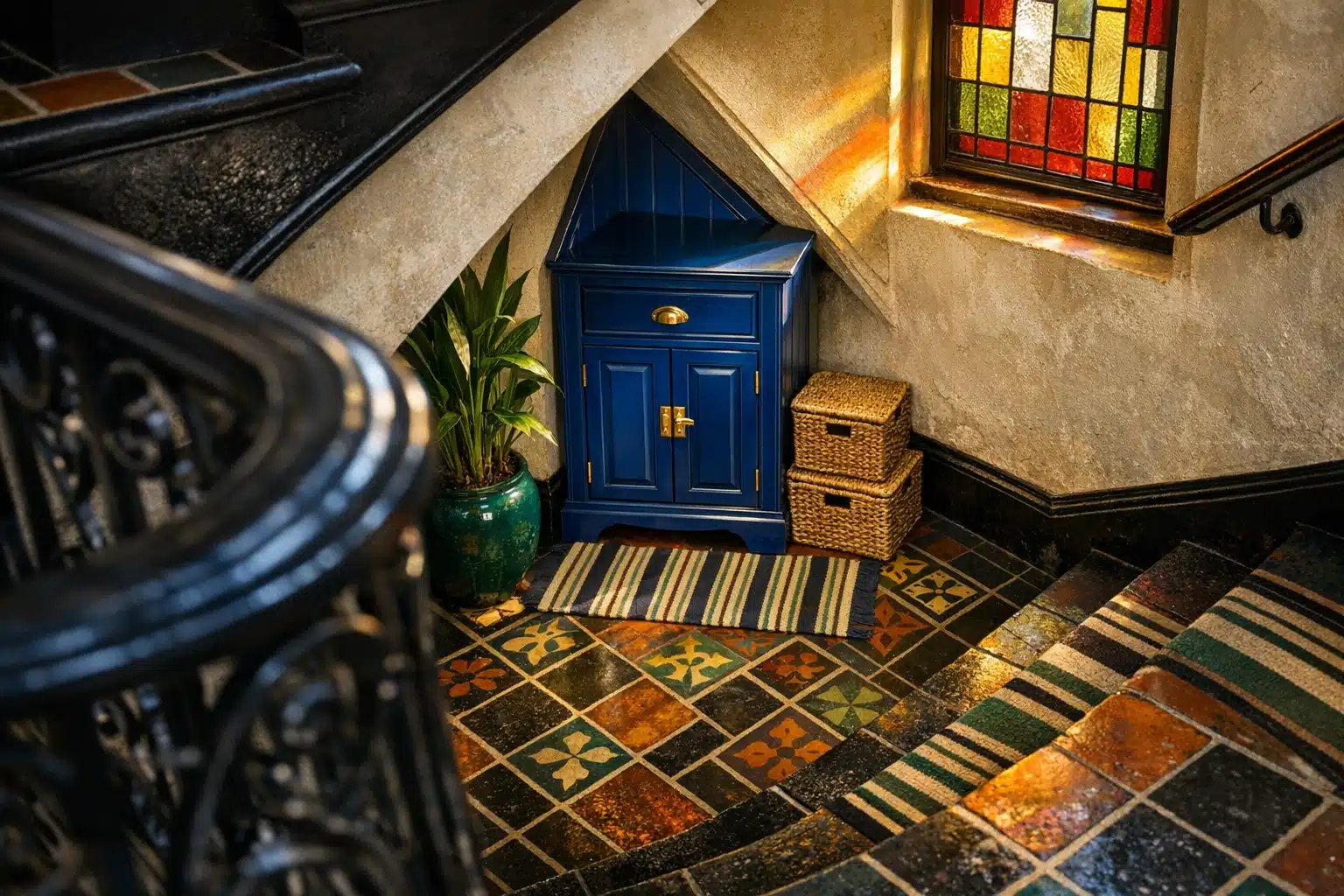
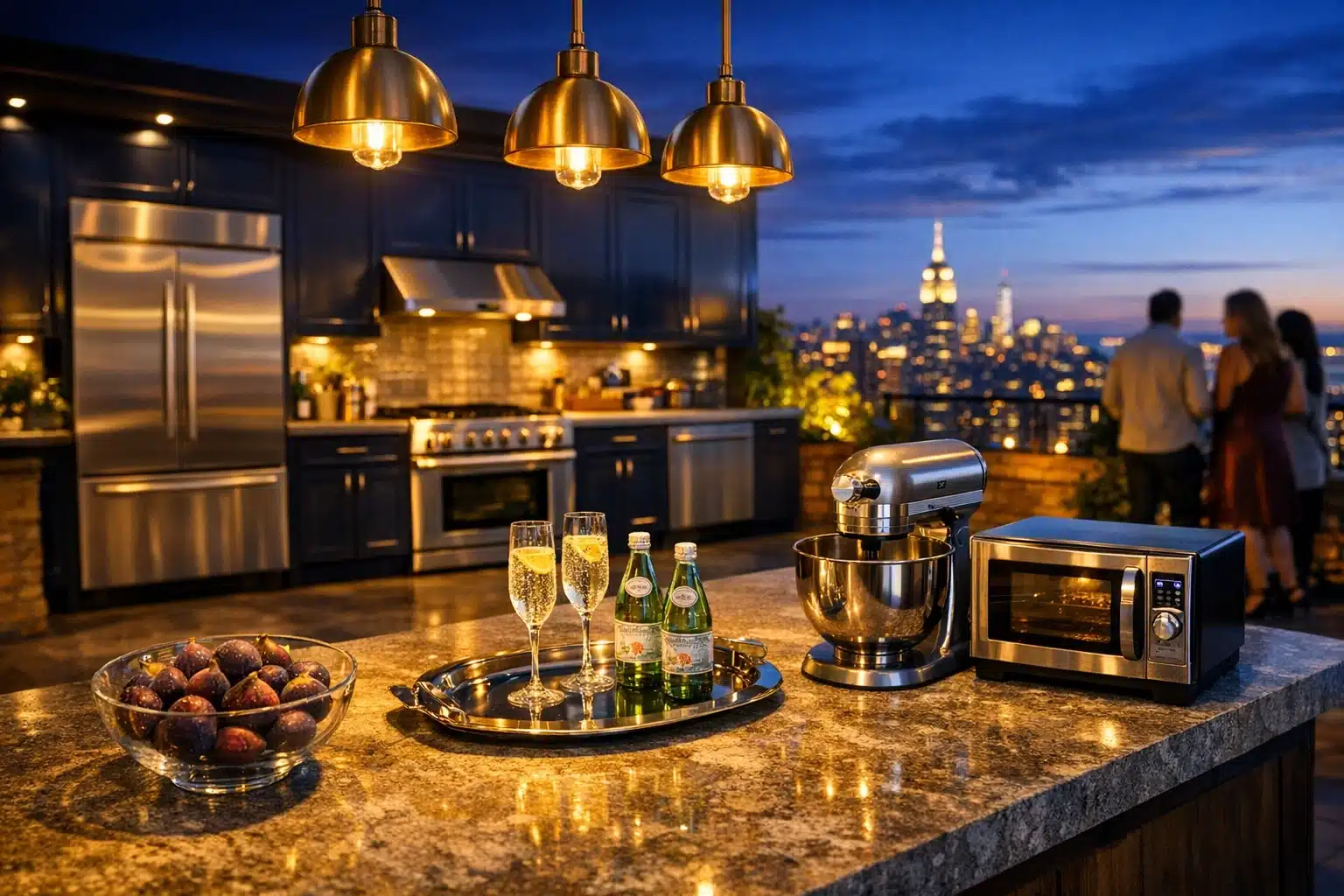
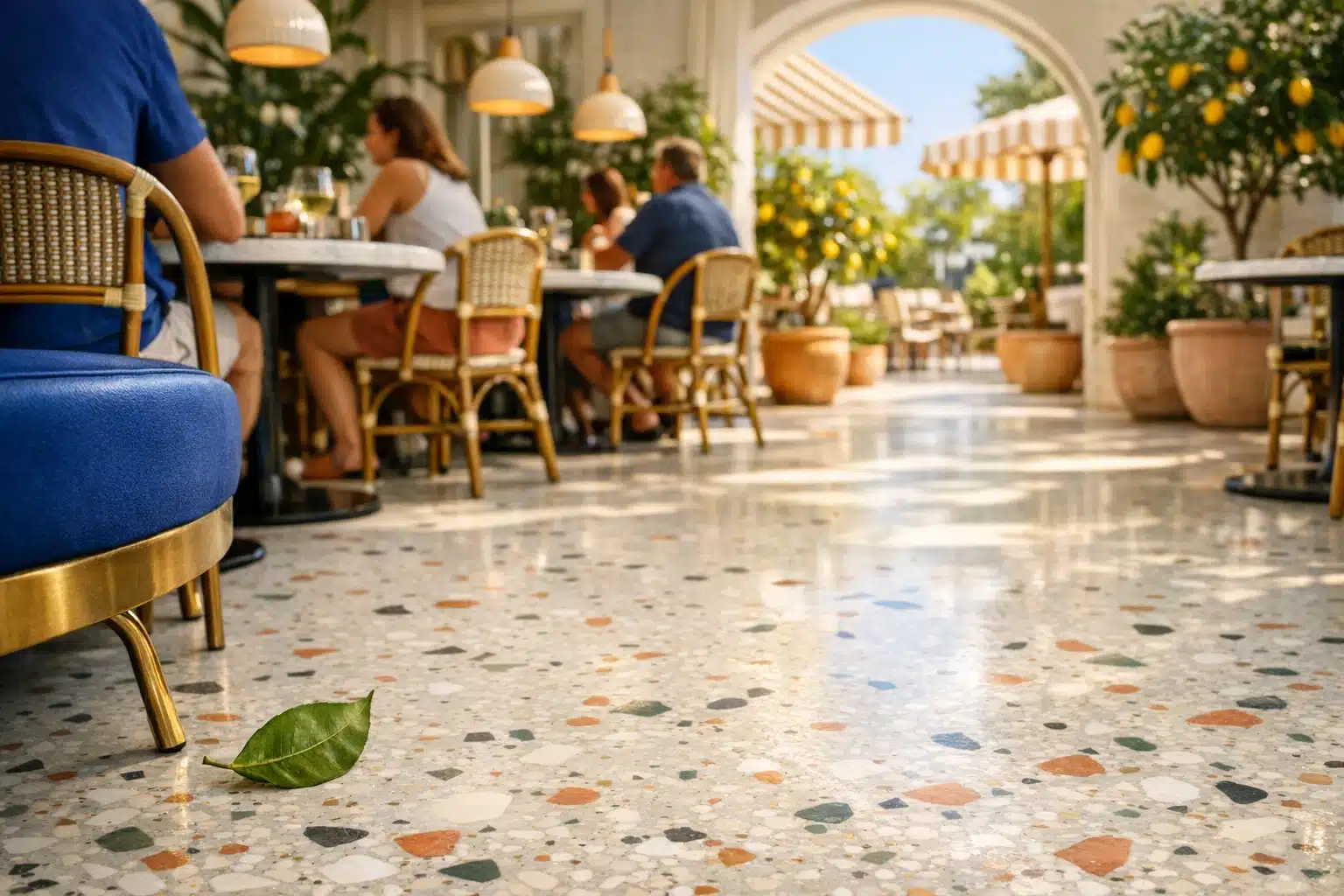
 Artificially generated image
 Innovative Ideas for Modern Epoxy Flooring
Epoxy flooring has stepped well beyond the utilitarian image of the old workshop floor. In today’s homes and commercial interiors, it acts as a finish, a protective shield, and a design tool that can resist moisture, stains, abrasion, and constant traffic. Its ability to take on color, texture, gloss, and embedded detail makes it especially relevant in spaces where appearance and durability must work side by side.
That shift matters because flooring is one of the few surfaces people see, touch, and test every single day. A well-planned epoxy system can reduce grout lines, simplify cleaning, brighten a dark room by reflecting light, or create a more controlled surface in places where safety matters. Designers appreciate the visual freedom, while owners often value lifecycle durability more than first impressions. The best modern ideas sit exactly between those priorities.
Outline
- How decorative finishes such as metallic, flake, quartz, and terrazzo-inspired systems are changing the visual language of epoxy.
- Which performance upgrades make modern epoxy safer, cleaner, and more adaptable than older one-note coatings.
- Where epoxy works especially well in homes and commercial settings, with design ideas tailored to each space.
- Why preparation, layering, and customization determine whether an innovative floor performs beautifully or fails early.
- How homeowners, designers, and facility managers can choose the right system by balancing budget, maintenance, appearance, and long-term value.
Decorative Finishes That Turn Epoxy Into a Design Surface
The most exciting change in epoxy flooring is visual: it no longer has to look like a plain sealed slab. Decorative systems now allow epoxy to imitate stone, terrazzo, polished concrete, and even shifting metal tones, while still preserving the seamless quality that makes it appealing in the first place. For many architects and renovators, this is the breakthrough that moved epoxy from the back room to the main room.
Metallic epoxy is one of the most recognizable modern looks. Metallic pigments are suspended in the coating, and during installation they are moved with rollers, squeegees, or air tools to create depth, waves, and cloud-like movement. The final floor can resemble brushed bronze, liquid graphite, smoked marble, or a storm seen through glass. No two metallic floors come out exactly the same, which is part of the appeal. That said, metallic systems tend to reward open spaces and careful lighting. In a small cluttered room, the effect can feel busy. In a showroom, lobby, studio, or contemporary basement, it can feel cinematic.
Flake and quartz broadcast systems offer a different kind of innovation. Rather than pursuing drama, they create texture, visual consistency, and better slip resistance. Decorative flakes can range from subtle stone colors to bold custom blends. Quartz systems often use colored sand-like granules embedded into the coating, producing a durable surface suited to locker rooms, clinics, cafés, and garages. Compared with a high-gloss metallic floor, these finishes hide dust, scuffs, and minor surface wear more effectively.
- Metallic epoxy works well for statement areas and contemporary interiors.
- Flake systems are practical where traction and visual forgiveness matter.
- Quartz systems suit spaces that need durability, texture, and a more architectural finish.
- Matte or satin topcoats can soften the look if full gloss feels too reflective.
Another modern direction is the terrazzo-inspired epoxy floor. Instead of attempting to mimic old-school terrazzo exactly, many current systems use chips, recycled glass, or stone-like fragments within pigmented resin to create a cleaner, more customizable version. This is especially attractive when a project wants the visual richness of terrazzo without the thickness, weight, or installation complexity of traditional cementitious systems. It can also be used to introduce branding colors or subtle zoning without making a room look overdesigned.
Color strategy has matured as well. Earlier epoxy floors often relied on aggressive blues, reds, or industrial gray. Current palettes are more interior-driven: warm taupe, clay, sage, charcoal, soft black, and off-white blends are increasingly common. A designer can now treat the floor less like an afterthought and more like a quiet foundation that supports cabinetry, shelving, lighting, and furniture. The clever move is not always the loudest one. Sometimes the most innovative floor is the one that whispers, letting texture and light do the storytelling.
Modern topcoats add another layer of design control. Gloss gives depth and reflectivity, which can make smaller rooms feel brighter. Satin reduces glare and fingerprints, while matte finishes suit spaces where a softer, grounded appearance is preferred. Because UV stability varies by product family, many installations use epoxy for build and bonding strength, then add a polyurethane or polyaspartic topcoat to improve color retention. In that layered approach, innovation is not just about looks. It is about giving beauty a structure that lasts.
Performance Innovations: Safer, Smarter, and More Adaptable Floors
Visual appeal may draw attention first, but performance is what determines whether an epoxy floor remains a good decision after the excitement of installation fades. Modern epoxy systems have improved not only in appearance, but also in chemistry, build options, and job-specific features. This matters because different environments ask different questions of a floor. A garage wants chemical resistance. A café cares about hygiene and cleanability. A home gym may prioritize impact tolerance and traction. A server room may need electrostatic control. Today’s systems can be tuned far more precisely than earlier coatings.
One of the biggest advances is the growth of low-VOC and lower-odor formulations. Traditional solvent-heavy coatings often limited when and where flooring work could happen, especially in occupied homes or businesses. Water-based and high-solids systems have improved that picture, although performance still varies by product type and project conditions. High-solids epoxy, for example, can provide substantial film build and durability with relatively low solvent content. For occupied interiors, that can make scheduling easier and reduce disruption, especially when paired with fast-curing topcoats.
Slip resistance is another area where modern specification has become more nuanced. A glossy floor is not automatically unsafe, and a matte floor is not automatically secure. Safety depends on surface profile, contaminants, footwear, slope, and maintenance. Installers can add aluminum oxide, polymer grit, silica, or other aggregates into specific layers to improve traction. The result can be tuned: smoother for residential interiors, more textured for wet utility areas, and heavier for commercial back-of-house zones. This is a better approach than choosing one texture level for every room.
- Anti-slip additives can improve wet traction without sacrificing the whole visual concept.
- UV-stable topcoats help reduce ambering in sunlit areas.
- Moisture-mitigating primers can help on slabs with vapor concerns.
- Electrostatic dissipative systems are available for specialized technical environments.
Modern epoxy also competes differently against other flooring materials. Compared with tile, it eliminates grout joints that trap dirt and need ongoing maintenance. Compared with sheet vinyl, it often offers better bond strength and can be renewed with recoats rather than full replacement. Compared with polished concrete, it usually provides greater stain and chemical resistance, though polished concrete may offer a more natural mineral look in certain designs. The right comparison depends on the room’s priorities, not on trend alone.
Cure performance has improved through hybrid assemblies as well. Standard epoxy systems still require disciplined timing, and full chemical resistance may take several days, but many projects now combine epoxy base coats with polyaspartic or polyurethane topcoats to accelerate return to service or improve UV performance. In practical terms, that can shorten downtime for retail or restaurant work. For homeowners, it may mean a garage or basement can be used again sooner, though schedules still depend on temperature, humidity, slab condition, and layer thickness.
There is also growing interest in hygienic and easy-clean surfaces. Seamless flooring reduces joints where debris and moisture can collect, and coved transitions at the wall can make wash-down areas simpler to maintain. It is important not to oversell this: no floor coating replaces routine cleaning or proper sanitation protocols. Still, when comparing day-to-day upkeep, a seamless epoxy system often gives maintenance teams fewer problem points than materials with seams, edges, or porous surfaces. In modern flooring, that kind of quiet efficiency is often the most valuable innovation of all.
Creative Applications for Homes, Retail Spaces, and Commercial Interiors
Innovation becomes meaningful when it answers a real spatial need, and epoxy’s modern relevance is easiest to understand when viewed room by room. The material is no longer confined to service areas. It now appears in residential kitchens, basement lounges, boutique retail stores, salons, workshops, fitness rooms, cafés, and offices that want a floor with character but not constant fuss. What changes from project to project is the way the system is styled and detailed.
In homes, the garage remains the classic epoxy setting, but even here the ideas are becoming more sophisticated. Instead of a single gray coating, many homeowners choose full-broadcast flake floors in layered neutrals that hide tire marks, dust, and small chips. Some projects add a contrasting parking bay stripe, a tool-zone border, or a subtle matte topcoat to reduce glare. The modern garage is less a storage cave and more a multi-use room for hobbies, exercise, bikes, laundry overflow, and weekend repair work. Epoxy suits that shift because it can handle abrasion and make the room feel finished rather than improvised.
Basements are another strong candidate. Because epoxy can create a seamless moisture-tolerant surface over properly prepared concrete, it fits rec rooms, home studios, bar areas, and utility spaces where carpet may be risky. Warm-toned metallics or stone-look systems can make a below-grade room feel intentional rather than temporary. In these spaces, lighting matters enormously. A reflective epoxy surface can bounce available light and reduce the cave effect common in older basements.
- Garages benefit from flake systems that hide wear and improve traction.
- Basements can use warmer tones to counteract the coolness of concrete.
- Laundry and mudrooms gain from easy cleaning and fewer water-sensitive joints.
- Home gyms often pair epoxy with defined equipment zones and textured topcoats.
In kitchens and open-plan living areas, epoxy is more selective but increasingly interesting. It works best in contemporary interiors where clean lines, minimal transitions, and large continuous surfaces are part of the design language. A satin-finish neutral epoxy can create a calm visual plane that links kitchen, dining, and circulation areas without the interruptions caused by grout lines or plank seams. That said, comfort underfoot, acoustics, and substrate conditions must be considered carefully in primary living areas. Epoxy is strong, but it is still installed over concrete, so the surrounding design should account for sound and softness elsewhere.
Commercial interiors offer even more room for inventive use. Retail spaces can use color zoning to guide movement without installing barriers. A café can combine a slip-resistant back-of-house quartz system with a more refined decorative front-of-house finish, maintaining visual continuity through color family rather than identical texture. Offices can use subtle insets or tonal shifts to separate circulation paths, collaboration zones, and reception areas. In showrooms, metallic or high-build pigmented floors can become part of the brand experience without requiring logo-heavy graphics.
There is also a practical side to creativity. In light industrial studios, maker spaces, and beauty service businesses, epoxy can resist spills and support faster cleanup, which reduces friction in daily operations. In environments where image matters, that operational ease becomes part of the aesthetic. A floor that stays cleaner, looks brighter, and reads as intentional supports the atmosphere people remember. The most successful installations are not trying to imitate another material at all. They use epoxy’s own strengths—continuity, depth, resilience, and precision—to give the space its own voice.
Installation Strategy and Customization: Where Good Ideas Become Reliable Results
The most imaginative epoxy concept can fail if the slab underneath it is not properly assessed and prepared. This is why experienced specifiers often spend as much time discussing moisture, profile, repairs, and sequencing as they do discussing color. Epoxy is not simply paint with ambition. It is a system, and every layer depends on the integrity of the one below. In practical terms, innovation begins with preparation.
Concrete condition is the first checkpoint. New slabs may contain excess moisture or curing residues, while older slabs can hide oil contamination, patchy repairs, laitance, or previous coating failure. Mechanical surface preparation—typically diamond grinding or shot blasting—creates the profile needed for proper adhesion. Cleaning alone is rarely enough. If vapor transmission is a concern, installers may need moisture testing and a compatible moisture-mitigating primer before decorative layers go down. Skipping this step can lead to blistering, debonding, or surface defects that no topcoat can rescue.
Crack treatment also requires realism. Hairline shrinkage cracks may be routed and filled, but an epoxy floor is not a magic eraser for structural movement. Some owners expect a glass-smooth surface to remain visually perfect over actively moving concrete. That expectation needs adjustment. In many cases, the better strategy is to choose a finish that visually softens minor substrate history, such as flake or quartz, rather than demanding mirror-like uniformity from a slab with a long memory.
- Surface preparation often determines more of the final outcome than color selection.
- Moisture testing is especially important for basements, ground-level slabs, and older buildings.
- Decorative samples should be reviewed under the actual lighting of the project.
- Topcoat choice affects gloss, UV resistance, scratch behavior, and maintenance feel.
Customization now extends well beyond pigment choice. Designers can specify brass divider strips, aggregate blends, embedded graphics, directional pathways, matte-satin-gloss contrasts, and even subtle transitions between public and service zones. A clever modern move is layering finishes by function: perhaps a decorative self-leveling epoxy in the main area, a heavier texture near entries, and a more chemical-resistant topcoat around sinks or utility points. This creates a floor that behaves differently where it needs to, without looking fragmented.
Thickness and build matter too. Thin coating systems can be appropriate for lightly used residential spaces if the slab is sound and expectations are modest. High-build self-leveling systems provide more visual depth and may better hide minor imperfections, but they usually involve more material and more careful control during installation. Full-broadcast flake and quartz systems require additional labor yet can deliver stronger wear performance and a more forgiving day-to-day appearance. In other words, the floor’s style is inseparable from its construction method.
Timing should be part of the design conversation. Some systems allow light foot traffic within roughly a day, while heavier use or chemical exposure may require longer cure windows. Fast-curing topcoats can compress schedules, but rushed installation in poor conditions often costs more later. Temperature, humidity, slab temperature, and ventilation all influence working time and final finish quality. The best contractors treat the site almost like a weather map.
When project teams take preparation seriously, customization becomes safer and more rewarding. That is when epoxy delivers its strongest modern promise: not just a pretty surface, but a coordinated finish built around the actual life of the room. In flooring, reliability is not the opposite of creativity. It is the frame that allows creativity to hold its shape.
Conclusion: Choosing the Right Modern Epoxy Floor for Long-Term Value
For homeowners, designers, and facility managers, the smartest epoxy flooring idea is rarely the one with the loudest effect. It is the one that fits the space’s traffic, cleaning routine, light exposure, safety needs, and design intent without asking for unrealistic maintenance in return. Modern epoxy offers impressive flexibility, but it still rewards honest decision-making. A beautiful floor that is wrong for the room will feel like a compromise within months. A well-matched system, by contrast, can quietly outperform flashier choices year after year.
Homeowners should begin by asking how the room is truly used. Is the garage mainly for parking, or is it also a workshop and gym? Will the basement host guests, storage, or creative work? Is a polished showroom look desirable, or would a forgiving flake finish make more sense for everyday life? These questions matter because the best flooring decisions are behavioral before they are decorative. A surface that hides dust, handles moisture, and cleans up easily may create more satisfaction than one dramatic metallic effect that shows every mark.
Design professionals can use epoxy most effectively when they treat it as a complete architectural surface rather than a budget substitute for something else. It can create continuity across large plans, support minimalist interiors, reinforce circulation paths, and deliver custom color with relatively few visual interruptions. At the same time, material honesty still matters. If a project wants warm acoustics, soft footfall, or natural grain, another flooring type may suit certain zones better. Epoxy performs best when chosen for its own strengths: seamlessness, resilience, chemical resistance, and finish versatility.
- Choose decorative intensity based on the scale and lighting of the room.
- Match texture and topcoat to safety, maintenance, and visual expectations.
- Budget for preparation, not just the visible finish layers.
- Request samples and review them under real site conditions before approving the system.
Facility managers and commercial owners should look closely at lifecycle value. A seamless floor that reduces cleaning complexity, resists staining, and can sometimes be refreshed with new topcoats may justify a higher initial cost than a cheaper finish with shorter service life. Downtime matters too. Fast-return systems can be valuable in retail, hospitality, and operational settings where closure carries a real cost. Still, no specification should ignore substrate condition, moisture history, or slip-resistance requirements.
The broader lesson is simple. Modern epoxy flooring is no longer a narrow industrial choice; it is a flexible finishing strategy with room for artistry, performance tuning, and long-term practicality. If you are planning a renovation, upgrading a business interior, or refining a hard-working utility zone, the most innovative path is to align design ambition with technical discipline. When those two meet, the floor does more than cover concrete. It supports the way the whole space lives, works, and lasts.