A Guide to E-Waste Recycling Centers
Every old phone, cracked tablet, and retired laptop tells a story about convenience, but it also leaves behind a materials problem that does not vanish when the screen goes dark. E-waste recycling centers sit where technology, safety, and sustainability meet, helping recover usable metals, keeping risky components out of landfills, and steering people toward responsible disposal. Understanding these facilities can protect personal data, reduce waste, and make everyday upgrades far less careless.
This guide opens with a practical outline and then moves through the major questions most readers have: why e-waste matters, what happens inside a recycling center, how to choose a reliable option, what to do before drop-off, and what future trends mean for households and small organizations. The goal is simple: to replace guesswork with useful steps.
Article outline:
- Why e-waste recycling centers matter now
- How modern recycling centers process electronics
- How to compare municipal, retail, and certified recycling options
- How to prepare devices for safe and secure drop-off
- What the future of e-waste means for everyday users
1. Why E-Waste Recycling Centers Matter More Than Ever
Electronic waste, often shortened to e-waste, includes a huge range of discarded devices and accessories. The obvious items are phones, laptops, printers, and televisions, but the category stretches further than many people expect. A dead router, a broken game console, a swollen battery pack, or a box of tangled cables can all belong in the same conversation. What makes this category important is not just the volume of junk it creates, but the unusual mix of materials packed inside. Electronics often contain plastics, glass, steel, aluminum, copper, and small amounts of precious metals, while some older or poorly handled equipment may also include substances that require careful treatment.
Global reports estimate that the world generated about 62 million metric tonnes of e-waste in 2022, while only a relatively small share was formally collected and recycled. That gap matters. When electronics are tossed into general trash, sent to unsafe dismantling operations, or abandoned in storage forever, valuable materials are lost and environmental risks increase. Even a junk drawer can feel like a tiny museum of abandoned technology, but multiplied across millions of homes and offices, that museum becomes a serious resource and waste problem.
E-waste recycling centers exist because ordinary disposal systems were not designed for modern electronics. Landfills are built to hold waste, not to separate cobalt from battery cells, recover gold from circuit boards, or prevent damaged screens and chemical components from being mishandled. A proper center is built around sorting, containment, documentation, and downstream processing. That difference is what turns a vague promise of “recycling” into a measurable process.
It helps to think about the main reasons these centers matter:
- They reduce the chance that hazardous components will be dumped or burned improperly.
- They recover reusable materials, lowering demand for some virgin raw materials.
- They support refurbishment and reuse when devices still have working life left.
- They create a safer path for data-bearing devices such as phones, hard drives, and laptops.
There is also an economic angle that is easy to overlook. Electronics are not just waste; they are compact storage units for materials that took energy, labor, and mining to obtain. Circuit boards, batteries, and metal frames may look modest, yet together they represent a surprisingly valuable stream of recoverable inputs. In that sense, an e-waste recycling center is part scrapyard, part materials laboratory, and part public service. For consumers, the relevance is immediate: every upgrade cycle eventually ends with a decision about where the old device goes, and that decision has consequences far beyond the drawer, closet, or curb.
2. What Happens Inside an E-Waste Recycling Center
To many people, a recycling center sounds like a single bin with a better reputation. In reality, a well-run e-waste facility is closer to a carefully managed chain of custody. Devices do not simply arrive and disappear. They are received, logged, sorted, tested, dismantled, consolidated, and sent through different recovery channels depending on their condition and material type. That process can vary by country, company, and certification level, but the broad stages are surprisingly consistent.
The first stage is intake. Staff members may weigh the load, separate household items from business assets, and identify products that need special handling, such as lithium-ion batteries, monitors, or networking equipment. Working devices may be routed toward refurbishment, which is usually better than immediate material recovery because reuse keeps a whole product in circulation. A functional laptop used for another two years often delivers more value than one dismantled on day one.
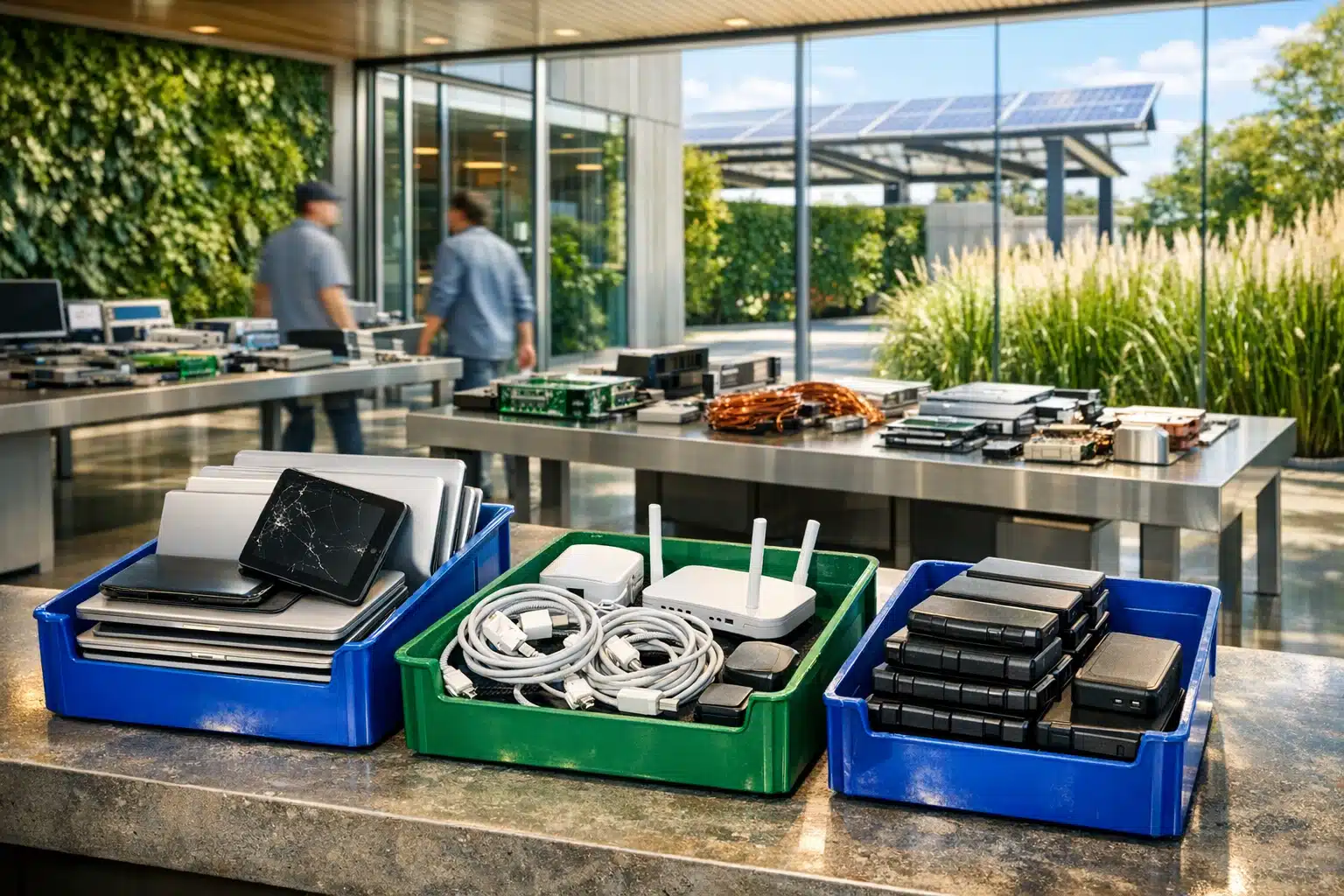
After intake comes sorting and triage. Some centers separate items by category, while others sort by downstream value or risk. A typical workflow may include:
- Reusable devices for testing and refurbishment
- Data-bearing equipment for secure wiping or destruction
- Batteries for fire-safe storage and specialist processing
- Screens, printers, and mixed electronics for dismantling
- Cables, metal housings, and power supplies for bulk material recovery
Data security is a major part of the process, especially for computers, servers, and phones. Professional recyclers often follow recognized data sanitization practices, and some offer certificates of destruction or documented wipe reports. For businesses, that paperwork can matter as much as the recycling itself. A responsible center knows that a hard drive is not just a metal object; it may contain payroll files, client records, contracts, or years of family photos.
Next comes dismantling. Some items are taken apart by hand so batteries, toner, circuit boards, and other components can be separated safely. After that, mechanical systems may shred or break materials down into smaller fractions. Magnets, optical sorters, screens, and eddy current systems can then help separate ferrous metals, non-ferrous metals, plastics, and other streams. What looks chaotic from the outside is often a precise series of steps designed to improve recovery rates and lower contamination.
Not all centers operate at the same standard, which is why certifications and transparency matter. Programs such as R2 and e-Stewards are often used as trust signals because they address environmental practices, worker safety, downstream accountability, and data handling. While no label replaces common sense, a center that can explain its process clearly is usually preferable to one that offers only vague assurances. In short, a true e-waste recycler is not a black hole for gadgets. It is a system built to decide what can be reused, what must be secured, and what materials can be returned to the manufacturing chain.
3. How to Choose a Trustworthy E-Waste Recycling Center
Finding a recycling center is easy. Finding a good one takes a bit more attention. The difference matters because electronics can carry private information, fire risks, and materials that should not be exported, dumped, or processed carelessly. A trustworthy center should make its policies understandable, not mysterious. If a company cannot explain what happens after drop-off, that is usually a reason to keep looking.
Most people choose between four main options: municipal collection sites, retailer or manufacturer take-back programs, nonprofit reuse organizations, and private commercial recyclers. Each has strengths. Municipal sites are convenient and often low-cost for residents, but they may accept only certain products or host limited collection dates. Retailer or manufacturer programs can be easy to use and may fit consumers replacing one device with another, though the accepted item list can be narrow. Nonprofit refurbishers may prioritize social reuse, which is excellent for working equipment, but they may decline damaged or obsolete devices. Private recyclers typically handle the widest variety of materials and can offer business services, yet their quality varies more widely, so verification is important.
When comparing options, ask direct questions. A reliable operator should be prepared for them. Useful questions include:
- Do you offer secure data destruction or documented wiping?
- What certifications or audited standards do you follow?
- Do you export any materials, and if so, under what controls?
- Which items do you accept, and are there any extra fees?
- Do you refurbish working equipment before recycling the rest?
- Can businesses receive itemized receipts or chain-of-custody records?
Price should not be the only factor. Some items cost recyclers money to process, especially older displays, damaged batteries, and low-value mixed plastics. A small fee is not always a warning sign; sometimes it is evidence that the recycler is dealing with costly materials properly instead of cutting corners. Free collection is attractive, but consumers should still understand how the operator makes the process financially viable.
Reviews and local reputation can also help, though they are not enough on their own. Look for evidence of organized operations, clear accepted-item lists, safe battery guidance, and documented privacy practices. For business users, service range matters too. A company replacing dozens of workstations may need pickup, serialized tracking, and audit-ready reporting. A household may care more about convenience, evening hours, and whether cables, accessories, and broken peripherals are accepted in one visit.
The best choice depends on the device and the user. A working desktop might belong with a refurbisher. A bag of dead power banks may need a specialist collection point. A stack of office laptops is better suited to a recycler that can provide secure handling records. In other words, the right center is not simply the nearest one. It is the one whose process matches the risk, value, and condition of what you are handing over.
4. Preparing Electronics Before You Drop Them Off
Dropping off e-waste is easiest when the real work happens beforehand. Preparation protects your information, improves the recycler’s efficiency, and reduces the chance that a reusable product will be treated like scrap too early. Many people remember to clear photos from a phone but forget a memory card in the slot, or they wipe a laptop while leaving cloud accounts linked to the device. A careful handoff starts at home or in the office, not at the collection counter.
The first decision is whether the item should be recycled at all. If a device still works, reuse usually beats raw material recovery. That could mean selling it, donating it to a reputable refurbisher, or repurposing it at home. A functioning monitor used in a guest room or a modest laptop used for schoolwork can extend the value already built into the product. Recycling is important, but it should not become a reflex that crowds out practical reuse.
Once recycling is the right choice, focus on data and power. Back up the files you need, sign out of accounts, and reset the device properly. On phones and tablets, remove SIM cards and memory cards. On laptops and desktops, wipe storage if possible and check whether drive encryption or activation locks need to be removed. Businesses should go further by creating an asset list, recording serial numbers, and assigning responsibility for handoff. That small administrative step can prevent confusion later.
A useful preparation checklist looks like this:
- Back up photos, documents, and account credentials you still need.
- Sign out of cloud services and remove device locks where appropriate.
- Factory reset phones, tablets, and laptops after backup is complete.
- Remove SIM cards, SD cards, external drives, and accessories you want to keep.
- Store damaged lithium batteries carefully and follow the recycler’s packaging rules.
- Call ahead if you are bringing printers, old displays, or bulk business equipment.
Batteries deserve extra caution. Swollen, punctured, or overheating lithium-ion batteries should never be tossed loosely into a bag or drawer for transport. Some recycling centers require terminals to be taped, individual bagging, or drop-off in special containers because damaged batteries can ignite. That sounds dramatic, but it is simply the reality of dense energy storage in small products. A pocket-sized battery can create very real trouble if mishandled.
It also helps to know what not to bring. Certain sites refuse appliances, loose toner, smoke detectors, or heavily broken glass components. Others accept peripherals but not commercial quantities. Calling ahead can save a wasted trip. Think of it as the difference between arriving at an airport with the right documents and discovering at the desk that one detail was missing. Good preparation turns recycling from an errand full of uncertainty into a short, clean, well-documented handoff.
5. What This Means for Households and Small Organizations
E-waste recycling centers are becoming more important because the electronics stream is changing fast. Devices are smaller, more battery-dependent, and more deeply embedded in daily life than ever before. Smart speakers, wearables, routers, tablets for children, backup drives for home offices, and fleets of laptops for hybrid teams all add to the flow. At the same time, repairability remains uneven. Some products are easy to open and upgrade, while others seem designed as sealed puzzles. That tension shapes the future of e-waste just as much as recycling technology does.
One major trend is the broader shift toward a circular economy. Instead of the old pattern of buy, use, discard, and replace, manufacturers, governments, and recyclers are under pressure to keep products and materials in circulation longer. That includes better collection systems, stronger refurbishment markets, more durable device design, and improved recovery of battery materials and critical metals. It also includes policy debates around right to repair, producer responsibility, and labeling that tells buyers whether a device can be fixed without heroic effort.
For ordinary users, this bigger picture matters because it changes what a “responsible choice” looks like. Recycling is important, but the smarter ladder often goes in this order: maintain, repair, reuse, refurbish, and only then recycle. A family replacing a phone every year creates a different footprint from one that stretches the same device through battery replacement and careful use. A small business that refreshes computers in batches can save money and reduce waste by partnering with a refurbisher or certified recycler that offers resale or reuse channels before dismantling begins.
There are still real challenges. Informal recycling in some parts of the world can expose workers and communities to pollution. Lithium battery fires are a growing operational risk. Consumer confusion remains high, especially around what is accepted and how data is handled. Yet the path forward is not complicated for most readers. It rests on a few reliable habits:
- Buy electronics with lifespan, repairability, and update support in mind.
- Use trusted recycling or take-back channels instead of general trash disposal.
- Protect data before handoff and ask for documentation when needed.
- Choose reuse first when a device still has practical life left.
- Store old devices intentionally instead of letting them disappear into permanent clutter.
For households and small organizations, that is the practical conclusion. You do not need to become a materials scientist to handle e-waste responsibly. You only need a better routine: know what you have, decide whether it can be reused, prepare it carefully, and choose a recycler that can explain its process without hand-waving. The drawer of obsolete gadgets is not just a pile of yesterday’s purchases. It is a set of decisions waiting to be made well, and an e-waste recycling center is often where those decisions finally become useful.