Stylish Solutions for Safe Showers
Outline and Introduction: Why Style and Safety Belong Together
Step into a well-designed shower and the room tells a quiet story: comfort matters, but so does confidence. Wet tile, poor lighting, and awkward controls can turn a simple routine into a daily risk, especially for older adults, children, or anyone recovering from injury. At the same time, few homeowners want their bathroom to resemble a clinic. The good news is that modern products now make it possible to build a shower that feels refined, calm, and far safer to use.
Bathrooms are among the most accident-prone areas in a home because water changes traction instantly and hard surfaces leave little margin for error. Falls are a major concern for older adults, yet the issue is not limited to age. A rushed morning, shampoo underfoot, dim lighting, or a high step over a tub can challenge almost anyone. That is why shower safety has moved from a niche concern to a mainstream design priority. Homeowners renovating for aging in place, parents planning a family bathroom, and people simply wanting a more comfortable routine are all asking the same question: can practical safety look elegant? In most cases, yes.
Older approaches often treated safety as an afterthought. A slippery floor would be covered with a flimsy mat. A grab bar might be added years later, looking temporary and out of place. Today, the strongest bathrooms are designed from the start with safety built into the structure, finish, and flow of movement. Instead of hiding supportive features, good design integrates them so naturally that the room still feels intentional and inviting.
This article follows a clear path so readers can move from big-picture thinking to specific choices:
- How flooring, wall materials, and drainage affect traction and maintenance
- Which layout decisions make movement easier and reduce awkward reaching
- How benches, grab bars, and controls can support daily use without disrupting style
- Why lighting, glass, and visual contrast matter as much as tile selection
- How to choose upgrades that suit your household, budget, and long-term plans
Think of the modern safe shower as a small piece of architecture rather than a collection of products. Every detail, from the threshold to the valve placement, shapes the experience. A beautiful shower should not merely impress a guest for ten seconds; it should quietly help its users every single day. That makes the topic relevant not only to design enthusiasts, but also to anyone who values a home that works well under real conditions.
Flooring, Wall Surfaces, and Drainage: Safety Starts Underfoot
If shower safety has a foundation, it is quite literally the floor. Most slips begin where water, soap, and smooth material meet. Choosing the right surface is therefore one of the most important decisions in the entire bathroom. Fortunately, the safest options no longer force homeowners into a dull, institutional look. Manufacturers now offer textured porcelain, matte ceramic, engineered stone, acrylic shower pans, and mosaic tile in finishes that range from spa-like minimalism to warm, handcrafted character.
Porcelain tile is a favorite for good reason. It is durable, widely available, and offered in many slip-resistant finishes. Matte and lightly textured porcelain generally performs better in wet areas than polished tile, which may look striking in a showroom but can become slick when water and soap are involved. Small-format mosaic tile is another strong option because the many grout lines add grip underfoot. That is one reason it has remained popular in wet rooms for decades. The trade-off is maintenance: more grout means more cleaning and more joints to seal or monitor over time.
Acrylic and composite shower pans provide a different set of benefits. They are often warmer under bare feet than tile and can be easier to clean. Many are molded with subtle texture that improves traction without feeling rough. Compared with tiled bases, they may offer faster installation and fewer failure points in budget-conscious remodels. However, some homeowners prefer tile because it creates a more custom look and allows precise coordination with walls, niches, and adjoining flooring.
Drainage matters just as much as material choice. Even the best slip-resistant floor can become hazardous if water pools. A properly sloped base directs water efficiently toward the drain, reducing standing water and soap film. Linear drains have become especially popular in contemporary bathrooms because they support larger tile layouts and cleaner lines, while center drains remain common and effective when the floor is shaped correctly. Curbless or low-threshold showers also improve access, but they demand careful waterproofing and drainage planning. When done well, they feel seamless and elegant. When done poorly, they can spread water beyond the shower area.
When comparing options, it helps to ask practical questions rather than focusing only on appearance:
- How does the surface feel when wet and soapy?
- Does the manufacturer publish slip-resistance information for wet use?
- Will the finish be easy to clean without harsh chemicals?
- Can the material support the drainage style you want?
- Does the installer have experience with waterproofing and slope preparation?
A stylish safe shower begins where your feet land. If the floor, drain, and waterproofing are thoughtfully selected, the rest of the room has a much stronger chance of performing beautifully for years.
Layout, Fixtures, and Support Features That Feel Natural
A shower can use attractive finishes and still fall short if the layout forces awkward movement. Safe design is not only about preventing dramatic accidents; it is also about reducing the small daily strains that add up over time. Reaching too far for a control, stepping around a badly placed bench, or twisting to grab shampoo can make a shower less comfortable and less secure. Thoughtful planning turns these friction points into smooth, almost invisible conveniences.
One of the smartest layout choices is placing the controls where they can be reached before stepping fully into the spray. This allows the user to turn on water and adjust temperature without standing in a sudden blast of cold or hot water. Thermostatic controls are especially useful in multi-person households because they help maintain a steadier temperature. That feature is not just luxurious; it also reduces the chance of surprise temperature swings that can cause quick, unstable reactions.
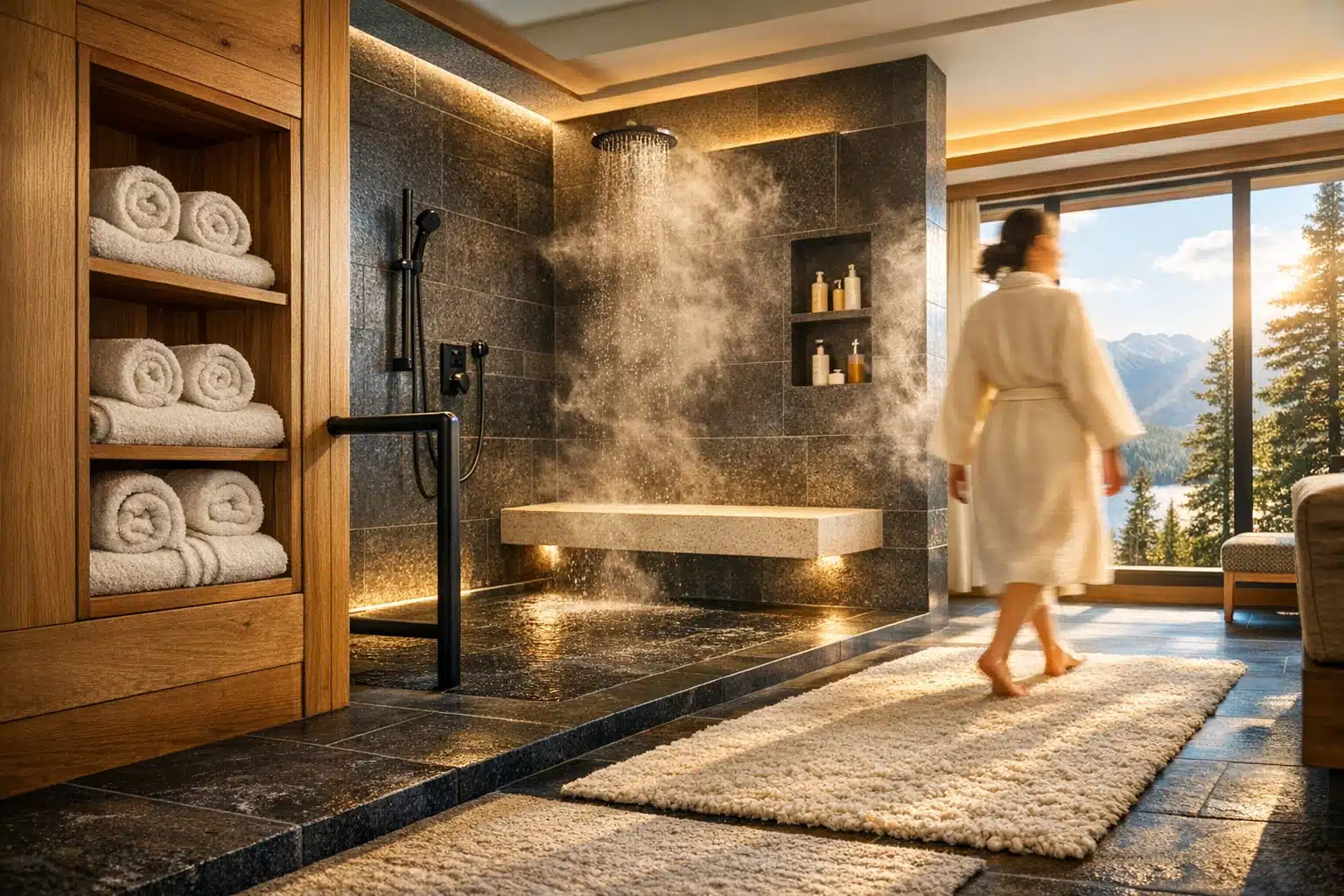
Grab bars are another area where design has evolved dramatically. They no longer need to look like emergency equipment bolted onto a wall as an afterthought. Many come in finishes that match faucets and shower frames, such as brushed nickel, matte black, stainless steel, or warm metallic tones. Some are styled to resemble sleek architectural rails. The key issue is performance, not appearance alone: a grab bar must be securely anchored and positioned where real support is needed, particularly near the shower entry, inside the bathing area, and around seating zones.
Seating deserves careful comparison. A built-in bench can look seamless and substantial, often becoming part of the tile composition. It offers a stable perch for shaving, bathing while tired, or simply creating a more spa-like environment. The downside is that it occupies permanent floor area. A fold-down seat frees up space when not in use and can be a strong solution in smaller showers, though its appearance is usually more functional and its comfort depends heavily on quality. For some households, a portable stool seems convenient, but it should be chosen carefully because unstable or lightweight pieces may slide or tip.
Handheld showerheads on adjustable slides are another stylish safety upgrade. They support seated bathing, easier cleaning, and less reaching. Paired with a fixed head overhead, they create flexibility without clutter. Built-in niches also help by keeping soaps and bottles off the floor, where they can become slip hazards. These details may sound minor, yet they shape how safely the room works day after day.
A practical shower layout often includes the following habits of good design:
- Wide, clear entry space with minimal obstructions
- Controls placed within easy reach from the entrance
- Grab bars integrated into zones where balance may be challenged
- Storage recessed into walls instead of stacked on the floor
- Seating chosen according to user needs, not trend alone
When all of these decisions are made together, the shower feels intuitive. That is the real mark of success: the room supports the body without demanding attention for every movement.
Lighting, Glass, Ventilation, and Visual Contrast: The Overlooked Safety Layer
Many homeowners concentrate on tile and hardware, yet some of the most important safety improvements come from what the eye can perceive. A shower that is difficult to read visually can be harder to use confidently, especially early in the morning, late at night, or for anyone with reduced vision. Good lighting, smart glass choices, balanced contrast, and proper ventilation make the room feel cleaner, calmer, and easier to navigate.
Start with lighting. A dim shower may look moody in a photograph, but shadow can hide edges, puddles, and changes in level. Recessed waterproof lighting over the shower area can provide clear visibility without overwhelming the space. Indirect or layered lighting elsewhere in the bathroom helps eliminate sharp contrast between a bright vanity and a darker shower corner. Color rendering also matters. Lights with a higher color rendering index tend to make surfaces appear more accurate, which can help users distinguish between wall, floor, niche, and fixture more easily.
Glass selection influences both safety and maintenance. Frameless shower glass is popular for its open, airy appearance, especially in smaller bathrooms where visual continuity makes the room seem larger. However, it can make edges less obvious if the panel is too invisible, particularly for users with low vision. A subtle metal frame, a slim vertical handle, or a discreet contrasting strip can improve visibility without compromising elegance. Textured or frosted bands can also add privacy while making the glass easier to see. In households where cleaning is a constant battle, choosing glass with a protective coating may reduce mineral buildup and soap residue.
Ventilation is less glamorous, but it directly affects safety. Poor airflow allows moisture to linger, encouraging mildew, slippery residue, and material deterioration. A quality exhaust fan sized appropriately for the room helps remove humid air after each shower. This protects grout, paint, caulk, and hardware, while also improving comfort. In a well-ventilated room, surfaces dry faster and the shower feels fresher rather than damp and heavy.
Visual contrast is another quiet hero. A pure white bench against a nearly identical white wall may look serene, yet it can be harder to distinguish at a glance. Contrast does not require dramatic black-and-white design. It can be as subtle as a slightly darker floor, a niche lined in a different tone, or hardware that stands out enough to be found quickly. This is especially useful for older adults and guests unfamiliar with the space.
When refining this layer of design, consider these details:
- Use lighting that clearly illuminates the floor and controls
- Make glass edges readable through hardware or subtle contrast
- Install effective ventilation to reduce persistent moisture
- Choose finishes that help users identify key surfaces and fixtures
- Avoid overly reflective materials that create glare in wet conditions
The result is a shower that does more than sparkle. It communicates clearly, which is one of the most underrated forms of safety in residential design.
Conclusion: Choosing the Right Safe Shower for Your Home, Budget, and Future
The best safe shower is rarely the one with the most features. It is the one that fits the people using it now while remaining flexible enough for the years ahead. For a young family, that may mean a low-threshold entry, easy-to-clean surfaces, and a handheld spray that helps with children and pets. For an older homeowner, it may mean stable support points, better lighting, and a bench that reduces fatigue. For someone renovating a forever home, it often means planning ahead so the bathroom remains comfortable through changing mobility, strength, or balance.
Budget matters, and not every project needs a full luxury remodel. Some of the highest-value upgrades are surprisingly practical: replacing slick flooring, improving drainage, upgrading lighting, installing properly anchored grab bars, or repositioning controls during a renovation. If a full redesign is possible, a curbless entry, built-in seating, and coordinated support features can create a space that looks elevated rather than medical. If the budget is tighter, a phased approach still works well when it is guided by a clear plan instead of scattered purchases.
A useful way to prioritize is to separate must-haves from nice-to-haves. A rainfall head may feel indulgent, but traction, visibility, and reliable support are what protect users every day. Beauty should still be part of the decision, because a well-loved bathroom is more likely to be maintained properly and used comfortably. The ideal result is not a compromise between style and safety. It is a design where the two reinforce each other.
For homeowners, renovators, and anyone comparing options, the smartest next step is to evaluate your current shower honestly. Ask where the room feels awkward, slippery, dim, cramped, or difficult to clean. Then match those weak points with improvements that address real use patterns. In many cases, an experienced contractor, designer, or aging-in-place specialist can spot issues that are easy to miss on your own.
If you need a simple starting list, begin here:
- Choose a wet-area floor with dependable traction
- Improve drainage and waterproofing before thinking about luxury extras
- Place controls where they are easy to reach safely
- Add support features that are attractive enough to feel permanent
- Use lighting and contrast to make the shower legible at a glance
A stylish safe shower is not about fear. It is about freedom: the freedom to move with more confidence, maintain a beautiful bathroom, and create a home that serves real life with quiet intelligence.