Top Train Trip Destinations for Seniors
Article Outline and the Qualities That Matter Most
For many older travelers, the pleasure of a trip is shaped as much by the journey as by the arrival, and trains offer a rare balance of comfort, scenery, and simplicity. Instead of wrestling with security lines, long highway drives, or constant hotel changes, passengers can settle into a seat, watch valleys and coastlines unfold, and move around with ease. That combination makes rail travel especially relevant for seniors who want memorable experiences without turning every transfer into hard work.
This article follows a practical outline before diving into specific destinations. First, it helps define what makes a rail trip especially suitable for older adults. Then it compares three standout regions that consistently appeal to mature travelers: Switzerland, Canada, and Japan. Finally, it closes with a summary focused on choosing the route that matches your budget, mobility level, sightseeing style, and appetite for long or short travel days. That structure matters because the “best” train trip is not always the most famous one. A panoramic alpine route may suit travelers who enjoy frequent stops and elegant hotels, while a transcontinental rail adventure may feel more rewarding to those who prefer unpacking once and watching a whole country roll past the window.
Several factors tend to matter more to seniors than to younger backpackers or business travelers. Comfort is the obvious one, but it is not the only consideration. Station location, boarding ease, access to elevators, meal service, restroom design, and luggage handling can shape the day just as strongly as the scenery itself. In many countries, trains also arrive in the center of town rather than far beyond it, which reduces the need for long transfers after a tiring ride. That alone can turn a demanding itinerary into a relaxed one.
When evaluating train destinations, it helps to compare them through a few simple questions:
• How long is the journey between major stops?
• Can you reserve seats in advance?
• Is the scenery visible in daylight?
• Are hotels close to the station?
• How much walking is required during transfers?
• Does the route reward slow travel, or does it demand quick connections?
Another useful point is flexibility. Some trips are ideal for a single spectacular ride, while others work best as part of a longer rail holiday. Switzerland excels at shorter scenic segments linked by frequent departures. Canada stands out for epic distance and immersive landscapes. Japan offers remarkable efficiency, clean stations, and the chance to combine rail travel with museums, gardens, temples, and food districts. These are very different experiences, and that is exactly why they deserve comparison. The goal is not to crown one universal winner, but to help senior travelers identify which destination feels manageable, enriching, and genuinely enjoyable from the first departure to the final arrival.
Switzerland: Compact Distances, Grand Views, and Easy Connections
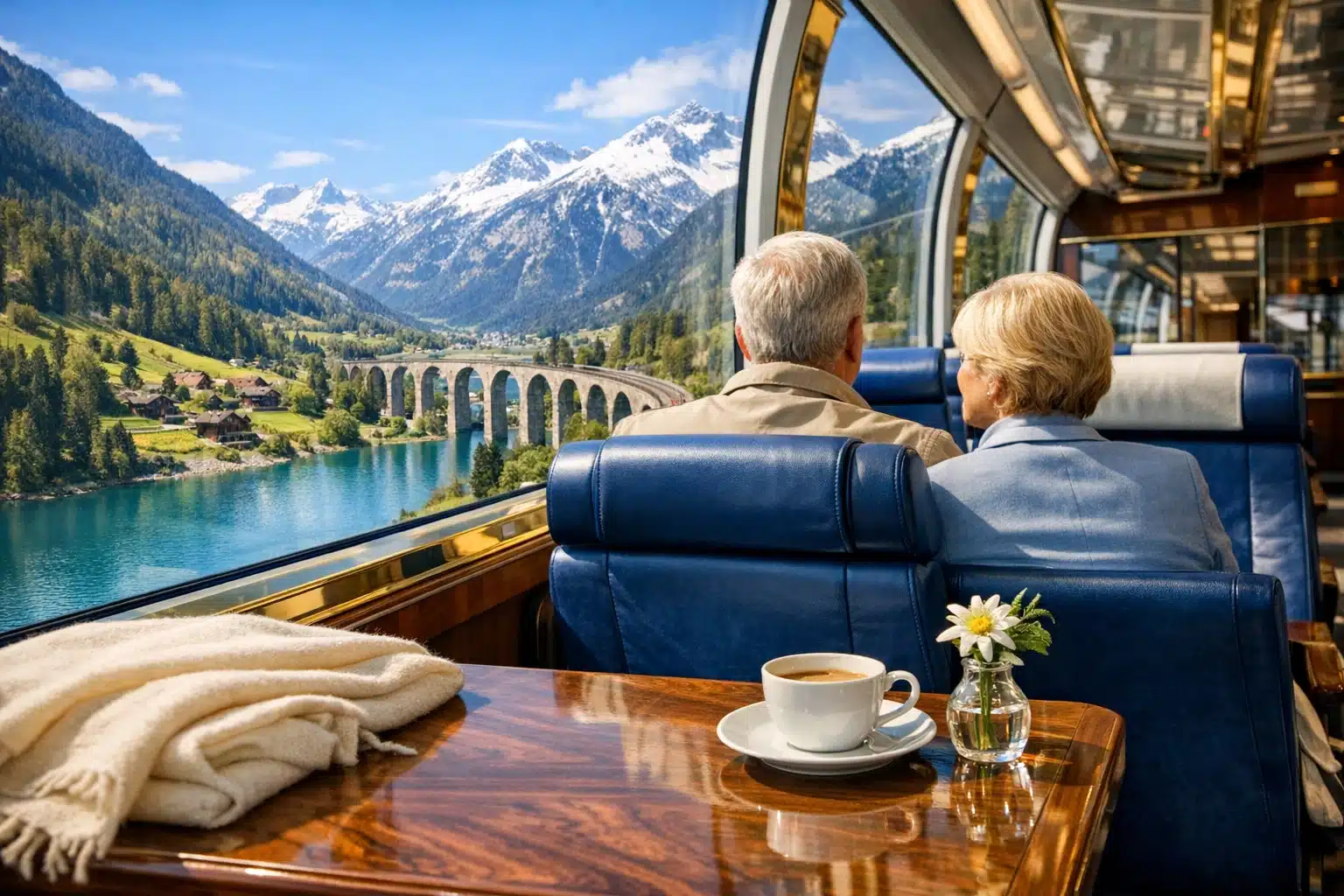
Switzerland remains one of the strongest train destinations for seniors because it combines a dense rail network with scenery that feels almost theatrical. Lakes shine beside tidy towns, mountain walls rise abruptly from green valleys, and station platforms are usually close to the heart of the action. That compact geography matters. Instead of spending a whole day simply getting from one region to another, travelers can cover meaningful distances in a few hours and still arrive with enough energy for a lakeside walk, a museum visit, or an early dinner. For older adults who want beauty without exhausting logistics, that balance is hard to beat.
The country offers several classic routes, each with a different flavor. The Glacier Express, which links Zermatt and St. Moritz in about eight hours, is the well-known choice for panoramic windows, high bridges, and a gentle sense of occasion. It is scenic in a grand, unhurried way, but it also involves a long seated day, so some travelers prefer to break their journey into smaller parts. The Bernina Express is shorter and often easier to fit into a broader itinerary. It travels through dramatic alpine terrain and descends toward Tirano in Italy, creating a striking contrast between snow-dusted heights and a softer southern atmosphere. The GoldenPass route is especially appealing for those who like variety because it threads together lakes, chalet country, and elegant resort towns such as Montreux.
For senior travelers, Switzerland’s advantages are practical as well as visual:
• Frequent departures make it easier to travel at a comfortable hour.
• Stations are usually central, reducing transfer stress.
• Scenic routes can be taken in segments rather than all at once.
• Hotels near rail hubs are common in cities such as Lucerne, Interlaken, and Zurich.
There are, however, a few trade-offs to weigh. Switzerland is rarely the cheapest rail destination, and seat reservations on special panoramic trains can add cost. Mountain towns may involve sloping streets or cobblestones, so choosing accommodation near the station is wise. Weather can also reshape the mood of the trip. A sunny day makes the windows feel like cinema; fog turns the same ride into something quieter and more mysterious. Even so, the reliability of the network and the short transfer times generally compensate for those variables.
If Canada is about scale and Japan is about precision, Switzerland is about graceful ease. It is especially well suited to travelers taking their first major rail holiday, couples who want scenic comfort without long-haul complexity, and anyone who prefers a trip built from manageable legs rather than a single marathon ride. In other words, it offers not just beautiful train travel, but a very forgiving kind of beautiful train travel.
Canada: Long-Distance Comfort Across the Rockies and Beyond
Canada offers a very different kind of railway appeal. Where Switzerland delivers concentrated beauty in short segments, Canada spreads its drama across vast distances, giving travelers time to settle in and truly inhabit the journey. Forests, lakes, prairies, mountain passes, and broad western skies appear not as quick snapshots but as slow chapters. For seniors who enjoy the romance of long-distance rail and do not mind devoting several days to the experience, Canada can feel wonderfully spacious. The train becomes less like transportation and more like a moving lodge.
Two names dominate most conversations: VIA Rail’s The Canadian and the Rocky Mountaineer. They serve different travelers, and that distinction matters. The Canadian runs between Toronto and Vancouver and takes roughly four nights, crossing a huge slice of the country. It suits passengers who like the idea of sleeper accommodations, communal dining, and a deep, uninterrupted sense of travel. Days unfold at a measured pace, with plenty of time to read, chat, rest, or simply stare out the window as the landscape changes character. The Rocky Mountaineer, by contrast, is structured around daylight scenery and overnight hotel stays rather than sleeping on the train. That can be an excellent match for seniors who want dramatic views without the motion, space limitations, or noise that sometimes come with overnight rail cabins.
The comparison is useful:
• The Canadian is broader, longer, and often more immersive.
• Rocky Mountaineer is shorter, more curated, and usually more premium in price.
• Sleeper service can reduce hotel changes, but hotel-based touring may feel easier for travelers who sleep lightly.
• Rocky Mountain scenery is strongest in western segments, while The Canadian offers a fuller sense of Canada as a whole.
There are practical issues to consider. Long-distance trains can experience delays because freight traffic shares parts of the network, so travelers should avoid overly tight onward connections. Mobility needs also deserve attention. Boarding assistance may be available, but it is best to confirm cabin layout, restroom access, and baggage policies before booking. Another factor is seasonality. Summer provides long daylight hours and the classic green-and-blue postcard look, while autumn can bring richer color in some regions but cooler temperatures and shorter days.
Canada works particularly well for seniors who value spacious observation areas, unhurried meals, and the chance to see a country at ground level rather than through an aircraft window. It is less about hopping quickly between famous cities and more about surrendering to the rhythm of distance. On some trips, that vastness can feel almost meditative. The rails hum steadily, the dining car lights glow in the evening, and the land keeps unfurling as if it has all the time in the world. For many mature travelers, that slower grandeur is exactly the point.
Japan: Efficient Rail Travel with Culture at Every Stop
Japan is one of the most appealing rail destinations for seniors who want comfort, punctuality, and cultural variety in the same journey. The rail system is famous for its efficiency, but the deeper advantage for older travelers is how smoothly it supports multi-city itineraries. A morning might begin in Tokyo with coffee near a station concourse, continue on a fast train past fields and suburbs, and end with a quiet walk through a Kyoto garden or an evening meal in Osaka. The transitions are often remarkably clean and direct, which helps reduce the travel fatigue that can drain enjoyment from otherwise exciting trips.
The shinkansen, or bullet train network, is the obvious centerpiece. It makes city-to-city travel fast enough to be convenient yet relaxed enough to remain enjoyable. Routes between Tokyo, Kyoto, and Osaka are especially practical because they connect major cultural centers without requiring flights. Reserved seating is widely available, stations are well organized, and onboard environments are generally calm. For seniors, that reliability can translate into real peace of mind. Instead of wondering whether a short delay will unravel the day, travelers can plan museum entries, tea house visits, or guided tours with more confidence than in many other countries.
Japan also rewards those who move beyond the best-known corridor. Scenic trains in Kyushu, coastal rides in parts of western Japan, and slower regional services near mountain and hot-spring towns can add texture to a trip. The major difference from Canada is duration. Japanese rail travel is often built from manageable segments rather than very long continuous rides, which makes it easier to tailor the schedule to energy levels.
Important strengths include:
• Excellent punctuality and clear departure information.
• Frequent service that allows flexible planning.
• Strong links between train stations and hotels, taxis, buses, and local subways.
• A wide range of trip styles, from fast intercity travel to leisurely regional excursions.
There are still challenges worth noting. Big stations such as Tokyo or Shin-Osaka can feel busy and overwhelming at peak hours, especially for travelers carrying large bags. Using luggage forwarding services can make a major difference, allowing you to travel with just a day bag on transfer days. Seating layouts, ticket rules, and train categories may also seem complex at first, so some seniors prefer to reserve the core itinerary in advance rather than improvise every leg. Compared with Switzerland, Japan can require a little more orientation at the beginning, but the reward is exceptional breadth. Few destinations allow you to pair high-speed convenience with temples, gardens, castles, hot springs, and food culture so naturally.
If Switzerland feels like a polished scenic album and Canada resembles a long-form novel, Japan is closer to a well-edited collection of vivid chapters. Each stop has a distinct mood, and the rail system stitches them together with remarkable precision. For seniors who enjoy structure, cleanliness, and a rich blend of urban and traditional experiences, Japan deserves a place near the top of the list.
Conclusion for Senior Travelers: Matching the Route to Your Pace, Budget, and Interests
The most suitable train destination for seniors depends less on age alone than on travel style. Some older adults want a gentle introduction to rail touring, with short distances, easy station access, and scenery that begins almost immediately after departure. Others are drawn to the old-fashioned pleasure of sleeping on a train, meeting fellow passengers over dinner, and watching an entire landscape change over several days. That is why comparison matters. Switzerland, Canada, and Japan all rank highly, but they shine for different reasons and ask different things from the traveler.
Switzerland is usually the easiest recommendation for first-time rail travelers who want confidence as much as beauty. It offers manageable journey lengths, central stations, regular departures, and famous scenic routes that can be sampled without committing to a week onboard. Canada suits travelers who are comfortable giving more time to the journey itself and who like the idea of long observation periods, sleeper service, and dramatic geographic scale. Japan is ideal for those who appreciate efficient systems, cultural depth, and the ability to combine modern cities with historic districts, gardens, and regional side trips in a compact schedule.
A simple way to decide is to start with your priorities:
• Choose Switzerland if you want stunning scenery with the least logistical strain.
• Choose Canada if the dream is a classic long-distance rail adventure.
• Choose Japan if you want reliable intercity travel woven into a rich cultural holiday.
• Consider adding a travel advisor or escorted arrangement if you prefer help with reservations, luggage, and station transfers.
There are also worthwhile alternatives not covered in full detail here. Scotland’s rail journeys, especially through the Highlands, appeal to travelers who enjoy rugged landscapes and English-language ease. Select Amtrak routes in the western United States, such as the Coast Starlight or California Zephyr, can also be rewarding for seniors who want impressive scenery closer to home. These options may not match Switzerland’s compact convenience, Canada’s immersive scale, or Japan’s precision, but they can still offer memorable and comfortable rail holidays when planned carefully.
In the end, the best senior train trip is one that respects energy, mobility, and curiosity in equal measure. A wise itinerary leaves room for lingering breakfasts, unrushed transfers, afternoon naps, and the occasional spontaneous stop in a town that looks inviting from the platform. Trains make that kind of travel possible because they restore something many trips lose: the pleasure of looking out the window and feeling that the journey is not an inconvenience, but a meaningful part of the story. For seniors who want to travel well rather than merely travel fast, that may be the strongest reason of all to choose the rails.