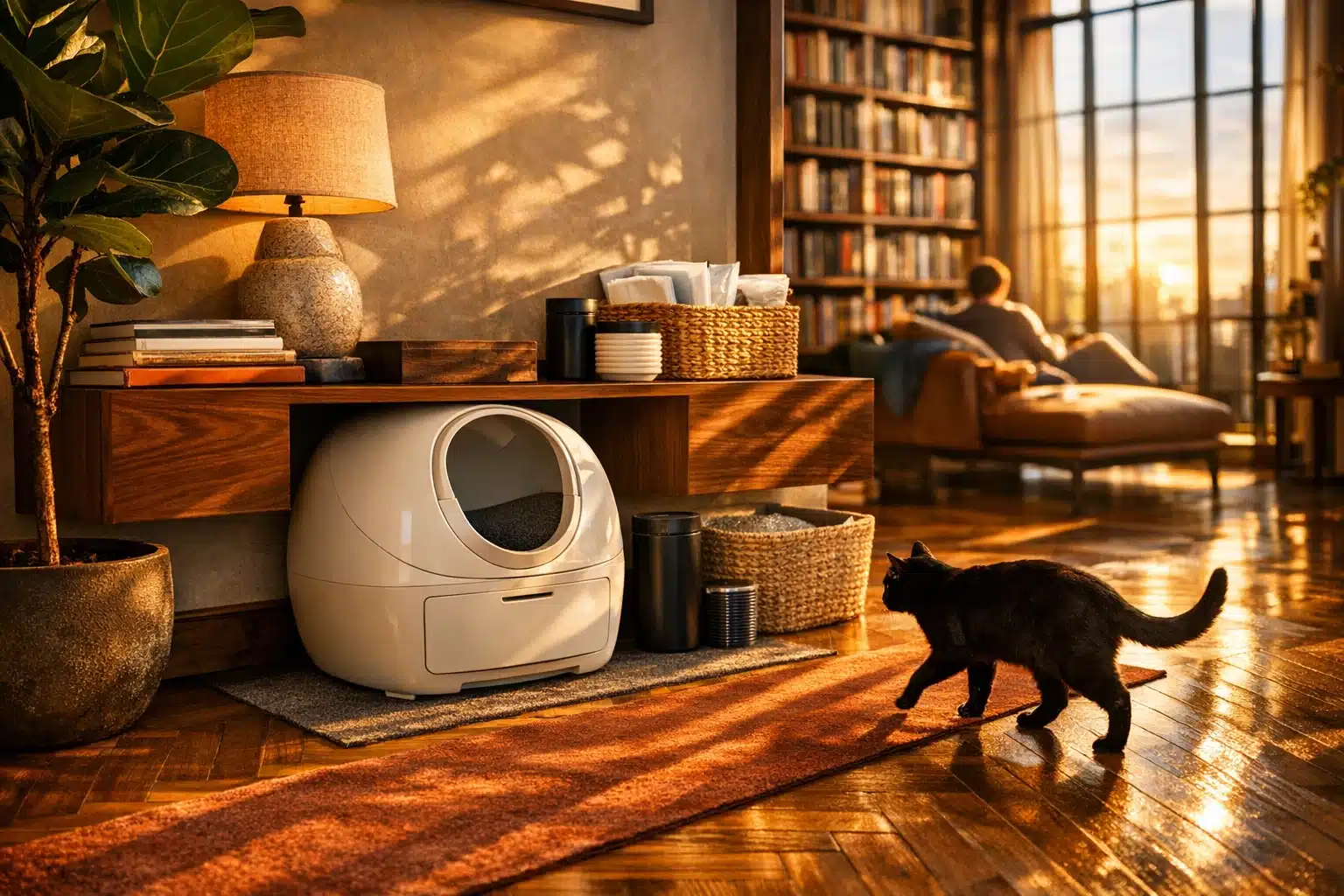
Walmart Self-Cleaning Cat Litter Box Clearance: Deals, Features, and Buying Tips
Clearance aisles can feel like treasure hunts, and self-cleaning cat litter boxes are one of those rare finds that can save both time and money. For busy cat owners, a discount on an automated box may turn a luxury item into a practical household upgrade. The catch is that not every markdown is a true bargain, because features, refill costs, and return policies matter just as much as the sticker price. This guide breaks down how to judge Walmart clearance offers with a calm eye and a shopper’s instinct.
Outline:
- How Walmart clearance works for self-cleaning cat litter boxes
- The features that deserve careful comparison before you buy
- The real cost of ownership beyond the advertised markdown
- Practical shopping tips for spotting strong deals and avoiding weak ones
- Final advice for different types of cat owners, plus a clear buying conclusion
How Walmart Clearance Works for Self-Cleaning Cat Litter Boxes
When shoppers see the word clearance, it is easy to picture a dramatic markdown and a lucky escape from full retail pricing. In reality, Walmart clearance on self-cleaning cat litter boxes usually reflects a mix of inventory decisions rather than a simple statement about product quality. A store may reduce a unit because it is making room for newer pet products, changing shelf layouts, rotating seasonal stock, or phasing out a specific model. Online listings can also drop in price when a seller wants to move slow inventory, clear out older packaging, or compete with rival listings.
This matters because clearance is not one single category. There are several situations hiding under the same bright price tag:
- In-store clearance, often tied to local stock levels and shelf resets
- Online clearance or reduced pricing, which may change quickly
- Open-box or returned items, where packaging condition can vary
- Discontinued models that may have limited accessory support later
For self-cleaning litter boxes, markdowns can be especially tempting because these products often sit in a higher price bracket than standard trays. Entry-level automatic units may sell around the low hundreds, while premium rotating models can cost several hundred dollars more. Because of that gap, even a moderate reduction can feel substantial. A 20 percent cut on a basic unit is helpful, but the same percentage on a more advanced model may create a very different value equation.
Walmart shoppers should also distinguish between items sold directly by Walmart and those offered through third-party sellers on Walmart.com. That small line under the product title can affect shipping speed, return options, warranty handling, and replacement support. A bargain is less impressive if return shipping becomes complicated or if customer support is routed through a marketplace seller with stricter terms.
The smartest approach is to treat clearance as an invitation to investigate, not a signal to rush blindly. Think of it like spotting a suitcase at the airport carousel with a bright ribbon tied around the handle: it stands out, but you still need to check whether it is actually yours. A discount deserves the same pause. Look at model age, litter compatibility, included accessories, and the reputation of the seller. Clearance can absolutely lead to a worthwhile purchase, but only when the markdown fits your cat’s habits, your budget, and the long-term cost of keeping the unit running.
Features That Matter Most When Comparing Clearance Models
Not all self-cleaning litter boxes work the same way, and this is where many clearance shoppers either win quietly or regret loudly. Two products may look similar on a listing page, yet one may suit a single calm cat in a small apartment while the other is built for heavier daily use in a multi-cat home. The phrase self-cleaning sounds simple, but the mechanics behind it can vary a lot.
The first point to compare is the cleaning method. Some units use a rake system that sweeps clumps into a covered waste compartment after a delay. Others rotate or cycle the litter bed, separating clean litter from waste and dropping the clumps into a drawer. A few depend on proprietary trays or crystals rather than regular clumping litter. Each style has trade-offs. Rake systems can be easier to understand and may cost less upfront, while rotating designs often look sleeker and can handle waste more efficiently. Proprietary systems may reduce scooping, but refills can raise long-term cost.
Before buying, pay attention to these practical features:
- Litter type compatibility, such as clumping clay, crystal litter, or a brand-specific refill
- Waste bin capacity, which affects how often you still need to empty the unit
- Odor control features like sealed drawers, carbon filters, or covered compartments
- Safety sensors that pause cleaning when a cat enters or approaches
- Noise level, especially for apartments or nervous pets
- Size and entry height, which matter for larger cats, senior cats, or kittens
Sensor quality deserves extra attention. A self-cleaning box is partly a machine, partly a piece of pet furniture, and entirely something your cat needs to trust. Better models typically delay the cleaning cycle until the litter has settled and the cat has moved away. That delay can improve clump formation and reduce the chance of a cat being startled. If the product page or manual does not clearly explain the safety features, that is a sign to slow down.
Another often overlooked feature is how easy the box is to clean when things get messy. Even automatic units need manual maintenance. Waste can stick to surfaces, litter dust can collect around moving parts, and deodorizing filters may need replacement. A clearance unit that saves money on day one but is awkward to wipe down every week may wear out your patience faster than your wallet.
Finally, watch for labels like smart, app-enabled, or Wi-Fi connected. These can be useful if you want usage tracking or maintenance alerts, but they are not essential for every household. Some cat owners appreciate the data; others just want a machine that does its job quietly in the corner like a dependable stagehand. The best clearance buy is not the one with the longest feature list. It is the one whose design matches your cat, your space, and your tolerance for ongoing upkeep.
Looking Past the Price Tag: The Real Cost of Ownership
A clearance sticker can create a powerful little illusion: that the bulk of the expense has already been defeated. With self-cleaning litter boxes, that is only partly true. The purchase price matters, of course, but the total cost of ownership is what decides whether you actually saved money over six months or one year. This is where careful shoppers separate a short-term thrill from a long-term win.
Start with consumables. Some automatic litter boxes work with standard clumping litter, which gives you more freedom to buy whichever formula fits your budget and your cat’s preferences. Others depend on disposable trays, special liners, filters, or proprietary cartridges. Those systems can be neat and convenient, but convenience usually carries an ongoing price. A unit that seems inexpensive on clearance may end up costing more than a pricier model if it requires frequent brand-specific refills.
Here is a practical way to compare value:
- Check whether the box uses regular litter or specialized refills
- Estimate how often waste drawers, liners, or trays need replacement
- Look up the cost of filters, deodorizer packs, or cleaning accessories
- Confirm whether replacement parts are still easy to find
- Review warranty length and who handles support
A simple example shows why this matters. Imagine one clearance unit priced at 149 dollars that needs a 25 dollar refill system each month. Another model costs 229 dollars but uses regular clumping litter and washable inserts. The cheaper machine may feel like the obvious winner at checkout, yet after a year the math can shift. This does not make refill-based systems bad; it simply means shoppers should compare the whole rhythm of ownership rather than the opening note.
Returns and warranties deserve equal attention. Walmart store returns may differ from Walmart.com marketplace returns, and large pet products can be awkward to repackage. If a clearance unit arrives missing a tray, a power adapter, or a side panel, the ease of fixing that problem matters. Some manufacturers offer clear replacement-part channels, while older or discontinued models may be harder to support.
There is also the cost of compatibility with your home. A large rotating box may need more floor space than a standard litter area allows. If it ends up in the wrong spot, spooked by foot traffic or impossible to access comfortably, you have saved money on paper and lost convenience in real life. Think in layers: purchase price, refill cost, maintenance effort, durability, and fit. Clearance is only a good deal when the machine remains affordable and usable after the receipt has faded into a drawer.
How to Shop Smart at Walmart and Avoid Weak Clearance Deals
Buying a self-cleaning cat litter box on clearance is part comparison shopping and part detective work. The goal is not just to find a lower number, but to understand why the price dropped and whether the item still meets your needs. A careful shopper can often avoid the common traps with a short, structured routine before checkout.
If you are shopping in-store, inspect the box closely. Clearance items sometimes have worn packaging, and that alone is not necessarily a problem. What matters is whether the contents are complete and undamaged. If the seal looks broken, ask a store associate whether the item is a return, a floor sample, or simply a shelf-worn carton. With automated litter boxes, missing parts can turn a bargain into a frustrating scavenger hunt.
If you are shopping online, start with the listing details rather than the photo gallery. Pay attention to:
- Who sells and ships the item
- Whether the model is new, open-box, or refurbished if stated
- The return window and whether return shipping is specified
- Recent customer reviews that mention noise, reliability, or sensor behavior
- Dimensions, especially if you have a larger cat or tight laundry-room space
It also helps to compare the clearance price against the item’s recent typical range rather than only its highest advertised list price. Retail pages can make a discount appear dramatic, but the better question is whether the product is meaningfully cheaper than it has been over time. If the unit has mixed reviews and the discount is small, patience may be wiser than impulse.
Another smart move is to research replacement support before you buy. Search for liners, trays, waste drawers, filters, and customer service information. If these are hard to find now, they may be even harder to find later. This is especially relevant for discontinued models. A clearance product should not feel like adopting a beautiful machine that has already vanished from the map.
There are also a few red flags worth respecting. Be cautious when the listing is vague about litter compatibility, when customer photos show uneven performance, or when the description leans heavily on flashy language but says little about cleaning cycles and maintenance. Strong product pages tend to explain how the box works, what is included, and what the owner needs to replace over time.
The best Walmart clearance strategy is refreshingly ordinary: read carefully, compare calmly, and imagine using the product on a sleepy Tuesday morning rather than during the excitement of the deal itself. If the box still makes sense in that quieter moment, it is probably worth considering.
Final Take for Walmart Clearance Shoppers: Who Should Buy and What to Do Next
For the right household, a Walmart self-cleaning cat litter box clearance deal can be genuinely useful. Busy professionals, apartment dwellers, people with mild mobility limitations, and owners who simply dislike constant scooping may find real value in a well-chosen automatic unit. In multi-cat homes, the benefit can be even more obvious if the machine has a large waste drawer and strong odor control. A cleaner box often encourages more consistent litter use, and that can be helpful when managing household routine.
Still, clearance is not automatically the right path for everyone. Some cats are cautious around moving devices, and some homes are better served by a simple manual box with excellent litter and a steady cleaning habit. Very young kittens, especially those below a model’s recommended weight, may not be ideal candidates for certain automated systems. Large cats also need extra attention to entry size, turning space, and interior room. Buying a discounted unit that your cat avoids is like bringing home an elegant treadmill for a roommate who only believes in naps.
If you are close to buying, use this short decision filter:
- Choose clearance if the model fits your cat’s size, uses affordable supplies, and comes from a seller with clear return terms
- Pause if the product depends on costly refills you cannot easily source
- Skip the deal if reviews repeatedly mention sensor failures, mechanical jams, or weak odor control
- Upgrade with confidence when the markdown lands on a model you already researched at full price
After purchase, a smooth setup improves your odds of success. Place the new box in a familiar, low-stress area instead of a noisy corner. Give your cat time to investigate before expecting immediate use. Some owners transition by keeping the old box nearby for a few days, then gradually encouraging the change. Follow the manual for litter fill level, because too much or too little litter can affect cleaning performance. Regularly empty the waste bin and wipe interior surfaces, even when the product is marketed as low maintenance.
For budget-conscious cat owners, the best clearance purchase is the one that reduces daily hassle without quietly creating new costs or new frustrations. For cautious first-time buyers, it makes sense to favor dependable design over flashy extras. For deal hunters, the real victory is not grabbing the lowest sticker price but finding a machine that works well enough to earn its place in your home week after week. If that balance of price, features, and practicality lines up, a Walmart clearance find can be more than a lucky bargain. It can be a genuinely smart pet-care upgrade.