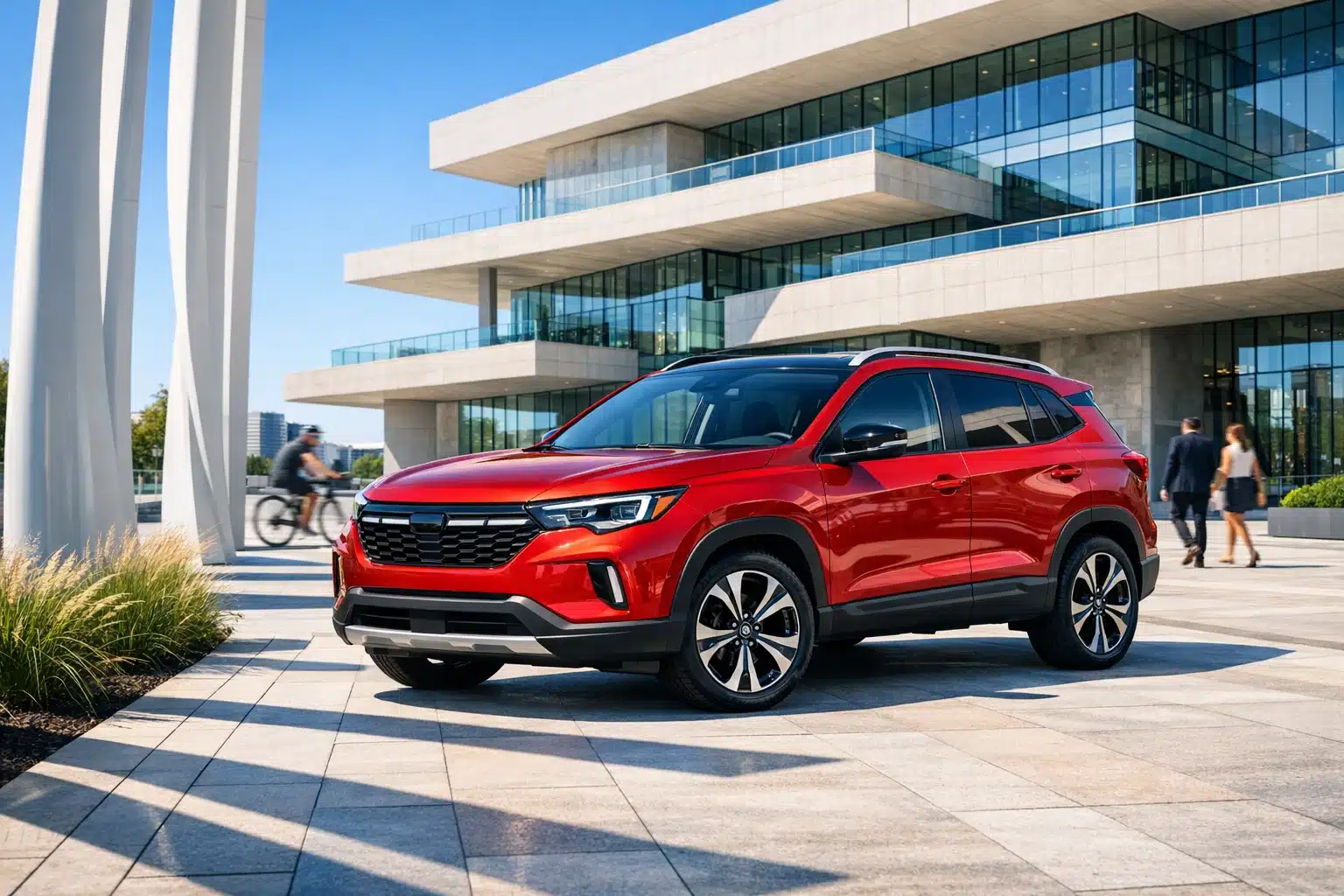
Toyota’s New RAV4 Model Is Absolutely Stunning
Introduction
Compact SUVs have become the default family car for millions of drivers, which is why every major RAV4 update matters far beyond Toyota showrooms. The newest model arrives in a segment where design, efficiency, safety, and digital convenience all shape buying decisions in equal measure. That makes this RAV4 more than a routine refresh; it is a signal of where mainstream motoring is heading next. For shoppers who want one vehicle to handle commutes, school runs, road trips, and rising fuel costs, this is a reveal worth studying closely.
Article Outline
• Exterior design and road presence: how the new RAV4 changes the visual formula and why that matters in a crowded crossover class.
• Cabin comfort and technology: the interior details that affect everyday use, from screen layout to rear-seat practicality.
• Powertrains and driving character: efficiency, hybrid strategy, ride quality, and how the RAV4 balances comfort with capability.
• Safety and real-world usefulness: driver assistance, storage, family-friendly touches, and the ownership factors buyers often value most.
• Comparison and final verdict: where the new RAV4 fits against rivals and who should seriously consider it.
Exterior Design: Why the New RAV4 Looks So Striking
The easiest reason people are calling the new RAV4 stunning is also the most visible one: Toyota understands that design now carries as much weight as practicality in the compact SUV market. Buyers still want fuel savings, cargo space, and a strong reliability reputation, but they no longer want those benefits wrapped in a shape that feels anonymous. The newest RAV4 appears to lean into that reality with a bolder stance, tighter surfacing, and a more deliberate visual identity. Instead of looking like a sensible choice first and an expressive one second, it aims to do both at once.
What makes that important is the way the segment has evolved. A decade ago, many compact crossovers looked soft and slightly interchangeable. Today, rivals such as the Hyundai Tucson, Kia Sportage, Mazda CX-50, and Honda CR-V all present a clear design point of view. Toyota could not afford to let the RAV4 drift into the background. The newer model seems to answer with sharper lighting signatures, stronger wheel-arch definition, and a more planted profile that suggests capability without pretending to be a hardcore off-roader. It still reads like a practical family SUV, but it carries itself with more confidence.
Several design themes usually matter most to real buyers, and the new RAV4 seems focused on all of them:
• A more assertive front end that gives the vehicle stronger road presence.
• Cleaner side surfacing that can make the body look more modern and less busy.
• Lighting details that help the SUV feel upscale, especially at night.
• Wheel and trim choices that allow buyers to choose between urban polish and rugged flavor.
There is also a functional side to good styling. Better aerodynamics, improved visibility from mirror and pillar placement, and smarter body cladding can all influence daily ownership. A handsome SUV gets attention in photos, but a well-resolved one works in bad weather, tight parking lots, and long highway stretches. That is where Toyota usually earns its reputation. The new RAV4 does not need to become theatrical to feel fresh. Its success depends on looking modern without becoming fussy, and from that angle, the latest design direction feels measured, contemporary, and easy to live with for years rather than months.
Cabin Comfort and Technology: The Space Where Owners Spend Their Time
If the exterior is what pulls people toward the new RAV4, the cabin is what will determine whether they stay interested after the test drive. For most owners, the interior matters more than the grille, the wheel design, or the paint color because it is the part of the vehicle they experience every single day. This is where Toyota has the chance to turn a strong first impression into lasting value. A compact SUV can be visually appealing, but if its storage solutions are awkward, its seats tire the back, or its technology demands too much attention, charm fades quickly.
The strongest RAV4 interiors have always been the ones that respect real-life use. That means wide-opening doors, seats that are easy to slide into, a dashboard that places controls where hands naturally go, and materials that can tolerate the mess of ordinary life. Coffee cups, backpacks, charging cables, muddy shoes, and grocery bags are part of the story here. Toyota does not need to chase luxury-car drama to win; it needs to make the cabin intuitive. In that sense, a well-judged mix of physical buttons and digital controls is still one of the smartest choices a mainstream brand can make. Not every driver wants every function buried in a screen.
The technology conversation matters too. Buyers increasingly expect a large infotainment display, clear graphics, fast smartphone pairing, multiple USB ports, and available wireless charging. They also expect these features to work consistently rather than merely looking impressive in marketing images. A useful modern cabin often includes the following basics:
• Quick and reliable Apple CarPlay and Android Auto integration.
• A digital instrument display that prioritizes clarity over visual clutter.
• Rear-seat charging access for passengers, especially families with teenagers.
• Sensible cubbies, a usable center console, and door bins that hold more than small bottles.
Compared with some rivals, the RAV4 has traditionally favored robustness over visual flamboyance. That is not a weakness if Toyota uses the new model to add better materials, lower cabin noise, and smarter ergonomics. In traffic, good design is often quiet; it shows up when the seat supports you after an hour, when the climate controls are simple, and when the cargo floor swallows a weekend’s worth of luggage without a wrestling match. The new RAV4’s interior opportunity is simple but significant: keep the toughness people trust while adding the polish modern buyers increasingly expect.
Powertrains, Efficiency, and Driving Character: The Core of the RAV4 Formula
However dramatic the styling may look, the real backbone of the RAV4 story has long been its powertrain strategy. Toyota built much of its modern advantage not by chasing the highest horsepower figures, but by making electrified driving feel normal, affordable, and easy to recommend. That approach matters even more now because fuel prices remain unpredictable and many buyers want lower running costs without committing fully to an electric vehicle. In that environment, the new RAV4 does not need to be radical. It needs to be efficient, smooth, and dependable in a way people notice every week, not just on launch day.
The outgoing RAV4 Hybrid became especially important because it helped normalize the idea that a family SUV could return roughly 40 mpg combined in U.S. specification while still offering all-wheel-drive availability and everyday practicality. That benchmark raised expectations across the segment. Buyers now compare compact SUVs not only on acceleration and space, but on how cleverly they blend power with economy. If Toyota preserves or improves that formula in the new model, it will remain one of the strongest arguments in the class. If plug-in hybrid variants continue as well, the appeal broadens further for drivers who can do many local trips on electricity and still travel long distances without charging anxiety.
Driving character matters too, even in a practical crossover. Most buyers are not asking the RAV4 to be a sports SUV, but they do want confidence. That usually means:
• Predictable steering that feels steady on the highway.
• A ride that absorbs broken pavement without becoming floaty.
• Strong low-speed response for city traffic and merging.
• Braking that transitions smoothly between regeneration and friction braking in hybrid models.
Compared with rivals, the RAV4 often sits in a useful middle ground. A Mazda may feel more eager in corners, while a Honda CR-V Hybrid may impress with refinement and packaging. Some Korean competitors can feel especially ambitious in design and technology. Toyota’s advantage is typically the total package: good efficiency, broad trim choice, familiar controls, and a powertrain reputation that many shoppers trust instinctively. The new model will succeed if it builds on that reputation rather than chasing numbers for the sake of headlines. For everyday drivers, the most beautiful performance figure is not always zero to sixty. Sometimes it is the number on the fuel receipt after a month of commuting.
Safety, Practicality, and Daily Ownership: The Details That Matter After the Honeymoon
Compact SUV buyers often begin with style and finish with spreadsheets. That is why the new RAV4 will be judged not only on looks or screen size, but on the things owners learn to appreciate over years of use. Safety technology, cabin flexibility, visibility, cargo management, and ownership confidence all carry serious weight in this segment. Toyota understands this better than most brands because the RAV4 is not a niche product; it is a default choice for families, commuters, retirees, and fleet-minded shoppers who need competence without drama.
Modern safety expectations are high, and rightly so. Buyers now look for a strong standard bundle of driver-assistance systems, including forward collision warning, automatic emergency braking, adaptive cruise control, lane-keeping support, blind-spot monitoring, and rear cross-traffic alerts. The difference today is not merely whether those systems exist, but how naturally they operate. Overly sensitive alerts or intrusive steering corrections can turn helpful technology into a daily annoyance. Toyota’s challenge with the new RAV4 is to make these systems feel calm, accurate, and trustworthy. Good safety tech should feel like a careful co-driver, not a nervous passenger.
Practicality is where the RAV4 has historically won loyal owners. Features that sound ordinary on paper can be decisive in real life:
• Rear seats that genuinely fit adults, not just children in a pinch.
• A cargo area shaped for boxes, strollers, and travel bags instead of awkward soft items only.
• A low enough load floor that lifting heavy groceries or pet carriers does not become irritating.
• Useful roof-rail and towing options for buyers with outdoor hobbies, depending on trim and market.
There is also the ownership conversation that rarely makes the splashiest headlines: resale value, maintenance expectations, dealer network support, and brand trust. These factors quietly influence monthly cost just as much as sticker price. A vehicle that sips fuel but loses value quickly or proves frustrating to service can stop feeling like a smart buy. The RAV4 has generally performed well because it pairs mainstream practicality with a reputation for durability. That reputation must still be earned by each new generation, of course, but it gives Toyota a valuable head start. The latest RAV4 will be especially attractive if it combines its fresh design with the sort of day-to-day usefulness that makes owners think less about the vehicle and simply get on with life.
Conclusion: Who the New RAV4 Is For and How It Stacks Up
The new RAV4 looks most compelling when viewed not as a fashion statement or a mere appliance, but as a carefully judged answer to what the modern compact SUV buyer actually wants. In this class, the competition is fierce and diverse. The Honda CR-V tends to appeal to shoppers who value smoothness, space, and a quietly premium feel. The Hyundai Tucson and Kia Sportage often attract attention with dramatic styling and generous technology content. Mazda’s CX-5 and CX-50 speak more directly to drivers who want a richer cabin or sharper road manners. Subaru’s Forester remains a favorite for visibility and foul-weather confidence. The RAV4 has to meet all of them in the middle of the ring.
Its advantage is that it rarely relies on one trick. Instead, it blends broad strengths in a way many households find easy to justify. If the latest model delivers sharper design, improved cabin execution, competitive hybrid efficiency, and the dependable user-friendliness the badge is known for, it will remain one of the safest recommendations in the market. That matters because most buyers are not looking for the most extreme SUV in any single category. They are looking for the vehicle that makes the fewest compromises over five or seven years of ownership.
The new RAV4 is likely to suit several types of buyers especially well:
• Families who need one car to cover commuting, errands, and holiday travel.
• Urban and suburban drivers who want SUV space without oversized dimensions.
• Efficiency-minded shoppers who prefer a hybrid over a full battery-electric switch.
• Existing Toyota owners ready to move into something newer without losing familiarity.
• Buyers who care about resale strength and long-term peace of mind as much as showroom excitement.
So, is Toyota’s new RAV4 stunning? Visually, it certainly seems more confident and more polished than the plain-vanilla crossovers that once dominated this category. More importantly, its appeal goes deeper than surface drama. It appears to understand the modern buyer’s balancing act: look good, waste less fuel, carry real cargo, protect passengers, and stay easy to live with in ordinary life. For readers shopping the heart of the SUV market, that is exactly why the new RAV4 deserves a place near the top of the test-drive list.